
Choosing the right reciprocating saw blade is essential for achieving precise cuts and maintaining safety during your DIY projects or professional tasks.
The first step is to select the appropriate blade material, as different materials are suited for specific cutting tasks. For instance, bi-metal blades are ideal for cutting through nails, layered materials, and other tough surfaces, while carbide-tipped blades are better suited for cast iron, abrasive surfaces, or dense materials.
Next, measure the thickness of the material you need to cut and choose a blade that is at least two inches longer than your material’s thickness. This extra length allows the blade to move freely through the material without binding or causing unnecessary stress, ensuring cleaner cuts and reducing wear on the blade.
Additionally, selecting the correct tooth pattern and TPI (teeth per inch) is crucial for the desired finish. A higher TPI provides smoother cuts suitable for delicate work, while a lower TPI offers more aggressive cutting for rough tasks.
Neglecting these considerations can lead to imprecise cuts, increased blade wear, or damage to your saw, so understanding each factor enhances your cutting efficiency and tool longevity.
What Blade Materials Are Best for Different Tasks?
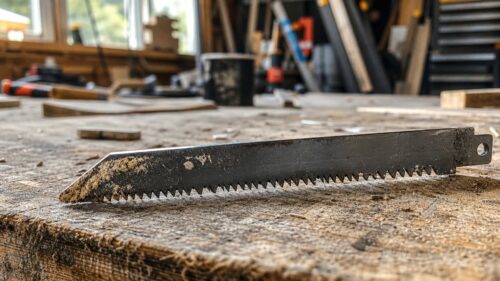
To choose the right blade material, first identify the material you plan to cut. Use blade materials suited for specific tasks. Bi-metal blades offer increased flexibility and are best for demanding jobs, so they are versatile for nails or layered materials. High carbon steel blades are affordable and ideal for soft materials but dull quickly; avoid tough surfaces. High-speed steel blades resist heat and last longer when cutting hardwoods or metals. Carbide-tipped blades work best on abrasive, hard materials, including cast iron. Diamond blades are necessary for dense, brittle surfaces like concrete or glass. Select your material to guarantee maximum hardness and durability for your project. Additionally, understanding the heat resistance of your blade material can help prevent premature failure during demanding cuts.
How Do You Pick the Right Blade Size for Your Job?
When selecting a reciprocating saw blade, you must consider the size of the blade to match your project’s needs. Choose a blade length at least 2 inches longer than the material thickness to prevent slipping and improve cutting efficiency. Use shorter blades (3-6 inches) for tight spaces or precision tasks. Longer blades (9-12 inches) work best for large cuts. Select a wider blade (¾ inch or more) for heavy-duty jobs requiring stability. Opt for thinner blades in softer materials for faster cuts, or thicker blades for tough, dense materials. Always match blade size to your saw’s maximum length and material rigidity for safety and best results. Additionally, understanding blade dimensions such as overall length, usable cutting depth, and thickness helps ensure you choose the most appropriate blade for your specific application.
What Blade Thickness and Tooth Pattern Should You Use?
Determining the right blade thickness and tooth pattern is essential for achieving clean cuts and extending blade life. Choose thin blades (around 0.035 inches) for flexible, precise cuts, ideal for delicate materials. Opt for thick blades (0.050 inches or more) when cutting dense, heavy materials, providing stability and durability. Adjust the tooth pattern, lower TPI (Teeth Per Inch), for faster, rough cuts; higher TPI gives finer, cleaner finishes. Use the table below to decide based on material and cutting needs:
| Material Type | Blade Thickness & Tooth Pattern |
|---|---|
| Softwood/Plastic | Thin blades, high TPI |
| Dense Wood/Metal | Thick blades, lower TPI |
| Thin Material | Thin blades, fine tooth design |
| Heavy Material | Thick blades, coarse tooth design |
| Precision Cutting | Thin blades, high TPI |
Selecting the appropriate blade design can significantly impact overall cutting performance and improve results.
How Does TPI Affect Cutting Speed and Finish?
Adjust the TPI (teeth per inch) setting on the saw blade based on your material and desired finish. Higher TPI produces smoother cuts and finer finishes, ideal for metal and plastic. Lower TPI speeds up cutting through wood and soft materials but results in rougher surfaces. TPI influences cutting speed by controlling how many blade teeth engage the material at once. Teeth per inch (TPI) also affects chip clearance and heat buildup during cutting, which are especially important considerations when working with metals or dense materials.
- Use high TPI for smooth, precise metal cutting.
- Use low TPI for quick, coarse cuts in wood or dense material.
- Balance TPI to match material density for best cut quality and speed.
Which Blade Shape and Tip Design Are Best for Your Cuts?
Select the appropriate blade shape and tip design based on your cutting task. Use a straight blade shape for cut precision on clean edges, or choose notched or tapered tips for easy plunge cuts into dense materials, providing blade tip functionality. Opt for curved blades for maneuverability or straight blades for accuracy. Notched tips enable dual functionality, plunge and edge cuts, saving time. Flat, beveled tips help start cuts in tight spaces, increasing control. Considering the abrasive cutting action and the specific material properties can help you choose a blade that minimizes vibration, dust, and heat buildup during cutting.
When Should You Use Specialty Saw Blades?
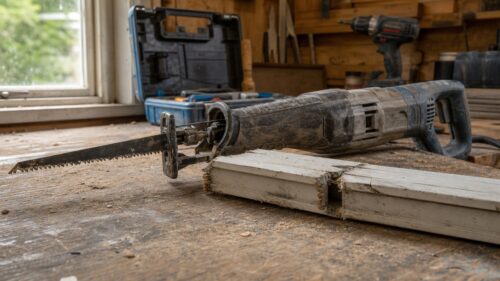
When should you use specialty saw blades? Use them when standard blades wear quickly or produce rough cuts. Select specialty saw blades like diamond blades for glass and masonry, or abrasive blades for dense materials. These blades improve safety, quality, and efficiency.
For demanding jobs, choosing the right reciprocating saw blade can significantly impact performance and durability.
- Use concrete blades for masonry cutting, such as concrete or fiber cement, with precise control.
- Use high TPI blades to cut through embedded nails without blade damage.
- Use tool-compatible blades for plastics or tough metals, ensuring durability.
Always match blade type to material for best results; otherwise, cuts may be rough or unsafe.
How to Match Blades to Your Material and Desired Results
To guarantee you choose the right saw blade for your material and desired cut quality, start by matching the TPI (teeth per inch) to your task. Use lower TPI (3-11) for cutting wood, so you achieve faster cuts, or else higher TPI (12-24) for smoother finishes in metal. Choose blade material based on material compatibility, bi-metal blades for nails, carbide-tipped for concrete. Select a blade length at least 2 inches longer than the material’s thickness. Use heavy-duty blades (.050 inch thick) for tough cuts, or thin blades (.035 inch) for quick jobs. Match the tooth pattern and tooth design to your material, standard for smooth cuts, variable for less vibration.
Tips for Maintaining and Using Your Reciprocating Saw Blades
Regularly inspecting your reciprocating saw blades helps maintain their effectiveness and safety. Check for dull teeth, chips, or missing segments, these reduce cutting power and risk injury. Clean blades after each use, especially when cutting abrasive materials like concrete, to prevent buildup that speeds up blade dulling. Store blades in a dry, organized container or sheath to prevent rust and damage, prolonging blade lifespan. Use the correct blade type and TPI selection for your material to avoid excessive force, which can bend or break blades. Replace blades promptly when worn out to guarantee safety and performance.
Frequently Asked Questions
Do All Reciprocating Saw Blades Fit All Reciprocating Saws?
Not all reciprocating saw blades fit all saws, as shank types, blade length, and compatibility features vary. Factors like blade material, teeth count, cut capacity, and application suitability influence fit, durability, cutting speed, and overall compatibility.
What to Look for When Buying a Reciprocating Saw?
When buying a reciprocating saw, evaluating blade material, length, tooth design for cutting capacity, vibration control, compatibility, durability, safety features, affordability, and brand reputation guarantees a superior, versatile tool that offers safety, efficiency, and freedom for various projects.
What Is the Best Reciprocating Saw for Home Use?
The best reciprocating saw for home use balances blade materials, tooth configurations, and durability, with ergonomic design, safety features, quiet operation, compatible blades, and efficient power to reduce vibration, noise, and enhance cutting speed for versatile DIY projects.
Are Harbor Freight Reciprocating Saw Blades Good?
Harbor Freight reciprocating saw blades offer versatility options with varied blade sizes, materials, and tooth designs, but durability factors and blade longevity vary. Vibration control and safety features impact ease of installation, influencing overall performance and cutting capacity.
Final Takeaways
Select the right blade carefully to guarantee your cuts are precise and safe. Choose materials suited for your task, match sizes to your project, and adjust TPI, shape, and tip design accordingly. Always maintain blades properly and follow instructions. If you ignore these steps, your blades may break, or cuts could be rough and unsafe. Proper selection and care will help your saw perform at its best, turning tough jobs into straightforward tasks.

- How to Choose a Reciprocating Saw Blade - September 17, 2026
- Corded vs Cordless Reciprocating Saw: What’s the Difference? - September 17, 2026
- What Is a Brushless Reciprocating Saw? - September 16, 2026