
Identify the tools you need before starting your project so you can select the right saw. Use a reciprocating saw for general cutting tasks; these tools move a blade back and forth to cut through different materials. Recognize that a Sawzall is a specific brand of reciprocating saw, designed for heavy-duty use with features like a quick-change blade. Remember, not all reciprocating saws are Sawzalls, so examine their build quality, motor power, and purpose carefully. Keep in mind, choosing the wrong tool can limit your project’s success or cause damage.
What Is a Reciprocating Saw and How Does It Work?
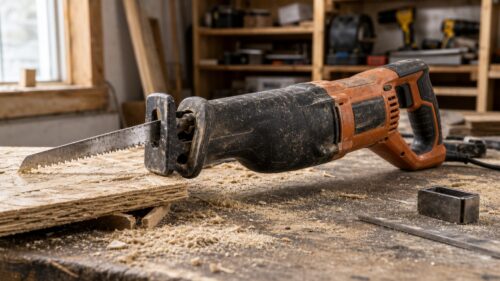
To understand what a reciprocating saw is and how it works, you must first identify its main parts: a motor, a blade clamp, and a reciprocating blade. Turn on the power tool to watch the blade move back and forth, using a motion that enables cutting. Engage the blade clamp to secure the blade tightly, this prevents it from slipping during cutting. Use the reciprocating motion, which can reach 2,000 to 3,000 strokes per minute, to cut through wood, metal, or plastic. Always hold the tool securely, and verify the blade is properly installed to avoid accidents. Additionally, understanding the cutting power of the saw can help determine its suitability for different tasks.
What Is a Sawzall, and How Is It Different From Other Reciprocating Saws?
A Sawzall is a specific type of reciprocating saw made by Milwaukee, and it is known for its high durability and performance. It uses a powerful motor to drive the blade back and forth, cutting through various materials. To understand this tool, recognize these points:
- Sawzall is a brand name, not a generic term.
- It features an innovative blade clamp for quick blade changes.
- Its power and performance set it apart from others.
- Not all reciprocating saws are Sawzalls, but all Sawzalls are reciprocating saws.
Use your judgment to select a tool that fits your needs, emphasizing power and durability, so your projects stay on track and free from limits. Consider selecting blades with high-speed-steel teeth, which offer enhanced durability and heat resistance for tougher applications.
Are All Reciprocating Saws Called Sawzalls? Clarifying the Terminology
Understand that not all reciprocating saws are called Sawzalls. Recognize that “Sawzall” is a brand name owned by Milwaukee, and it applies only to their line of reciprocating saws, whether corded or cordless. Use the correct terminology, say “reciprocating saw” for generic tools from different brands. Milwaukee’s Sawzall refers specifically to the brand’s product, not all tools. If you see someone using “Sawzall” for any reciprocating saw, clarify that it is a trademark, not the common term. Always differentiate between the brand name and the general tool type to avoid confusion. Additionally, understanding the difference between brands can help you choose the right tool for your needs.
How Do Design and Performance Differ Between Sawzall and Other Reciprocating Saws?
If you compare a Sawzall to other reciprocating saws, examine their design and performance features carefully. Focus on their motor, stroke length, and power output. A Sawzall has a more robust motor, up to 15 amps, providing higher power for tough jobs. Its longer stroke length (up to 1.25 inches) enhances cutting efficiency. The performance of a Sawzall surpasses other models in demanding tasks, thanks to industrial-grade materials. Additionally, the motor strength of a Sawzall ensures reliable performance under heavy-duty conditions.
When Is a Sawzall the Best Choice Over a Standard Reciprocating Saw?
When heavy-duty, demanding tasks are involved, recognize that a Sawzall is the better choice over a standard reciprocating saw. Use it when project needs include demolition, metal cutting, or large wood jobs. Its performance, powered by a robust motor, outperforms lighter tools. For prolonged use or tough materials like steel or thick lumber, rely on a Sawzall for efficiency and reliability. Additionally, a Sawzall often offers superior cutting performance when handling intensive tasks.
- Choose a Sawzall if materials exceed 2 inches thick or metal sheets are heavy.
- Opt for a standard saw for lighter, quick tasks under an hour.
How Do Price, Power, And Durability Compare Between Sawzall and Generic Models?
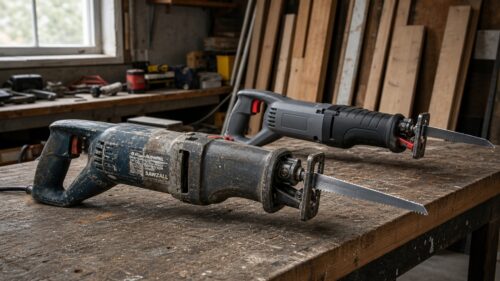
Compare the prices, power, and durability of Sawzall tools and generic reciprocating saws. Sawzall models from Milwaukee range from $100 to $300, offering high power, durability, and professional features. Smaller, generic models cost between $50 and $250 but lack advanced build quality.
Milwaukee Sawzalls cost $100-$300, offering superior power and durability over cheaper, less durable generic options.
- Price: Sawzall models are more expensive but last longer.
- Power: Sawzall motors (7-9 amps) deliver stronger cuts.
- Durability: Heavy-duty components resist wear and last through tough tasks.
- Models: Cheaper models may work for light use but lack longevity.
Choose wisely based on your need for high power and durability.
What Are the Best Uses And Compatible Materials for Sawzall and Other Reciprocating Saws?
Identify the materials you need to cut and select the appropriate blade for your reciprocating saw, such as a Sawzall. Use Sawzall blades designed for specific materials, which guarantee blade compatibility and maximize efficiency. For cutting wood or plastics, choose blades with teeth tailored for rough or fine cuts. For metal, use bi-metal or carbide blades, which tolerate thicker, tougher materials. In demolition work, switch blades as needed to match the material, pruning blades for branches, metal blades for pipes. Never force the saw or skip blade adjustments. Proper blade selection prevents damage and delivers the best results, making your cutting tasks safer and more effective.
How to Choose the Right Reciprocating Saw for Your Projects
Select the right reciprocating saw by first evaluating your project needs. Choose a Sawzall for heavy-duty tasks with thick wood or metal, or a lighter, portable model for simple cuts. Consider the equipment’s power levels; more power suits demanding work, while less power fits light projects.
- Match blade compatibility for your materials.
- Decide if you need variable speed for control.
- Check for orbital action for faster cutting.
- Consider vibration control for comfort.
Ensure your choice aligns with cutting speed and your work environment, so your saw performs efficiently. Avoid mismatched tools that could limit safety and precision.
Final Tips: Understanding the Differences and Making the Right Choice
When choosing a reciprocating saw or a Sawzall, you must carefully understand their differences to make the right decision. Assess your cutting tasks to find out if you need a durable, heavy-duty Sawzall or a simpler reciprocating saw for lighter work. Consider the power source, corded or cordless, as it influences mobility and power. Evaluate weight and blade compatibility to match your strength and project demands.
Choose between a heavy-duty Sawzall for tough jobs or a lighter reciprocating saw for basic tasks, considering power, weight, and blade compatibility.
- Use a Sawzall for demanding, professional tasks.
- Opt for a general reciprocating saw for casual, occasional use.
- Match tool features with your specific cutting needs until you select the ideal tool.
Frequently Asked Questions
What Should You Not Do With a Reciprocating Saw?
One should avoid using the reciprocating saw improperly, such as applying excessive force, cutting unsuitable materials, neglecting safety precautions, using incorrect blade selection, ignoring maintenance routines, or attempting to cut beyond its power sources and ideal speed capabilities.
What Is the Best Reciprocating Saw for Home Use?
The best reciprocating saw for home use offers versatile blade compatibility, sufficient motor power, ergonomic design, precise cutting accuracy, and safety features, enabling freedom in DIY projects while ensuring ease, control, and reliable performance for various indoor renovation tasks.
Can I Cut Tree Branches With a Reciprocating Saw?
A reciprocating saw is suitable for tree trimming, limb removal, garden pruning, branch cutting, and yard maintenance on smaller branches up to 2 inches, providing quick cuts, but larger branches may require more powerful tools like a chainsaw.
Can I Cut a 2×4 With a Reciprocating Saw?
A trusty saw “cuts through the rough,” and a reciprocating saw can, with suitable blade types, power sources, and proper cutting techniques. Safety precautions and blade maintenance are essential, empowering users to work freely and efficiently on 2x4s.
Final Takeaways
Understand that the choice between a reciprocating saw and a Sawzall impacts your project’s success. Recognize the irony: while Sawzall is often used as a generic term, it’s a specific, high-performance tool that outlasts and outperforms standard models. You must select the right saw based on your needs, using a less capable tool may cost more in time and effort or else lead to subpar results. Make informed decisions, so your work is safe, efficient, and precise.

- 6 Best Heavy Duty Jig Saw for 2027 - September 26, 2026
- 8 Best Jigsaw Blades for Acrylic in 2027 - September 26, 2026
- 5 Best Festool Jig Saws for 2027 (Smooth Cuts Every Time) - September 25, 2026