
A brushless reciprocating saw is a highly efficient cutting tool favored by homeowners, DIY enthusiasts, and professionals for its powerful performance and durability. Understanding how this tool operates begins with examining its motor type, which significantly influences its functionality and longevity.
Unlike traditional models that rely on brushes, replaceable components that conduct electricity to the motor, a brushless reciprocating saw eliminates these parts, leading to decreased maintenance and improved operational efficiency. When inspecting this tool, look for the absence of brushes; instead, you will see a motor equipped with sensors and electronic controllers.
These advanced features manage the electrical flow more precisely, enhancing the motor’s performance. The design of a brushless reciprocating saw with sensors and controllers offers several practical benefits. It allows for better energy efficiency, longer motor lifespan, and smoother cutting action.
Recognizing these features is crucial because it helps you select a more capable, reliable tool suited for demanding tasks such as cutting through wood, metal, and other tough materials. To understand its working mechanism deeply, focus on how sensors detect load conditions and how electronic controllers adjust power delivery in real time, ensuring optimal operation and reducing the risk of overheating or premature wear.
What Is a Brushless Motor and How Does It Work?
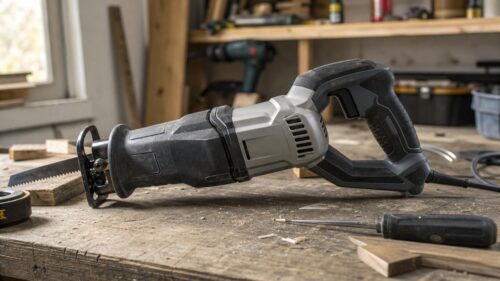
If you want to understand how a brushless motor works, start by learning its basic components and function. Identify the motor, which contains permanent magnets, and note the electronic controls, responsible for managing current flow. You must guarantee the electronic controls accurately regulate power; otherwise, performance drops. Recognize that brushless motors eliminate brushes, reducing friction, heat, and wear, which extends the motor lifespan. Maintain proper alignment of magnets and controls, or else efficiency decreases. Use efficient electronics to optimize performance and increase durability. Understanding the motor’s design, which emphasizes the streamlined structure of brushless motors, helps in securing long-lasting operation, so you achieve maximum efficiency.
How Do Brushless Reciprocating Saws Operate?
Start by understanding that brushless reciprocating saws operate with an electronically controlled motor. This motor uses sensors and a controller to direct the way electricity flows directly to the motor’s windings, thin wire coils that create magnetic fields. When you turn on the saw, the electronic system manages rotor position and power delivery. Adjust the saw’s speed using the electronic controls, so you can customize performance. Or else, the motor runs more smoothly and lasts longer because there are no brushes to wear out. Always keep the electronic parts clean and dry. Failure to do so can cause the motor’s efficiency and lifespan to drop. Additionally, electronic motor technology enhances overall motor durability and efficiency compared to traditional brushed motors.
Why Are Brushless Motors Better for Power Tools?
Begin by recognizing that brushless motors offer significant advantages over traditional brushed motors in power tools. Select brushless motors for your power tools to boost performance and efficiency. Use tools with these motors to gain about 25% more power and extend runtime by up to 50% on a single charge. Avoid tools with brushed motors, which generate more heat and wear, reducing lifespan. Choose brushless motors for smoother operation, less vibration, and better torque management. This choice results in longer-lasting power tools, saving money and effort. Use them to improve your work experience, especially during extended tasks or demanding projects. Additionally, cutting performance is often enhanced with brushless motors, making tasks like pruning branches or small tree cuts easier and more efficient.
How Does Brushless Technology Boost Power and Efficiency?
To understand how brushless technology boosts power and efficiency, analyze the motor’s design. Brushless motors use electronic controls instead of brushes, cutting friction and heat. This abrasive cutting action also contributes to more precise and cleaner cuts. It results in about 25% more power and longer run time. They transfer energy more effectively, so tools operate smoother and last longer. Use the table below to compare features:
How Does a Brushless Reciprocating Saw Last Longer and Run Longer?
Make sure your brushless reciprocating saw is properly maintained to prolong its life. Brushless motors generate less heat, so they wear down slower, increasing durability. The absence of brushes eliminates brush wear failures, making the tool more reliable. Regularly check and clean the electronic control system, which manages power delivery. A well-maintained saw uses its higher efficiency, providing longer runtime per charge. Reduced vibration and smoother operation decrease mechanical stress, preventing early failure. Keep the tool clean and free of debris, and replace worn parts promptly. Proper maintenance guarantees the saw remains efficient, durable, and capable of lasting longer with consistent performance. Additionally, motor design plays a crucial role in overall longevity and performance.
What Makes Brushless Saws More Durable and Easier to Maintain?
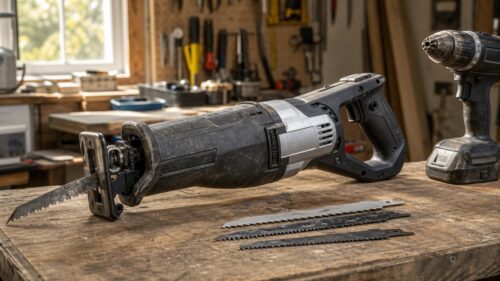
What makes brushless reciprocating saws more durable and easier to maintain? Use a brushless motor, which has fewer wearable parts like brushes. This reduces the need for frequent maintenance and prevents overheating. Install the saw in a cool, dry place to extend its lifespan. Employ the advanced electronic control system, so performance stays consistent over time. Avoid neglecting regular checks; otherwise, internal components may wear faster. When maintaining, clean dust buildup with compressed air. Replace worn parts promptly to prevent damage. Ensure proper cutting depth and material limits are observed to avoid overworking the blade and damaging the saw. These steps boost your saw’s durability, reduce repair costs, and guarantee long-term reliable use.
What Is Electronic Commutation and Why Does It Matter?
Electronic commutation is crucial for controlling how a brushless motor spins. It switches the electrical current in the motor’s windings, or coils, usually blue or green, using an electronic controller. You must precisely manage these switches or else the motor will run inefficiently, overheating, or stall. Make certain sensors accurately detect the rotor position, so the magnetic fields align properly. If you skip this, motor efficiency drops, energy wastes, and the lifespan shortens. Use electronic commutation to improve control, reduce heat, and extend the tool’s life. Proper setup guarantees smooth, powerful operation, indispensable for high-performance tools like reciprocating saws.
How Do Brushless Motors Minimize Heat and Maximize Performance?
Identify the motor’s windings, which are coils usually colored blue or green. These windings create magnetic fields that turn the motor’s rotor. Use your hands to observe the windings, as their design affects heat minimization and power efficiency.
| Part | Function | Light Indicator |
|---|---|---|
| Windings | Create magnetic force | Blue or green coils |
| Electronic Controller | Optimizes current flow | Small circuit board |
| Commutator | Switches electrical power | Copper ring |
| Magnet(s) | Generate magnetic field | Large black or gray piece |
| Rotor | Spins inside the stator | Center shaft |
Keep your hands steady and precise. Skipping steps risks overheating or damage, reducing saw performance.
Can Brushless Reciprocating Saws Deliver More Torque for Heavy-Duty Work?
When comparing brushless reciprocating saws to older models, it’s clear they can deliver more torque for heavy-duty work. Use a brushless reciprocating saw to cut tough materials like dense hardwood, metal, and thick PVC more easily. The increased torque, up to 25% compared to brushed models, allows these saws to handle demanding jobs without extra pressure. Engage the saw when working on heavy materials so the motor’s consistent power output powers through tough cuts efficiently.
- For best results, use the saw with a firm grip.
- Avoid overloading the tool to prevent motor damage.
- Use proper blades for specific materials.
Is a Brushless Saw the Right Choice for Professional and Demanding Tasks?
Evaluate whether a brushless saw suits demanding tasks by comparing its features to job needs. Use a brushless reciprocating saw for tough jobs, as it offers 25% more power and 50% longer run time. This allows continuous work on dense wood, metal, or masonry. Choose it to handle long projects without frequent stops. Consider its longer motor lifespan and variable speed control, which provide precision. If high performance and durability are priorities, a brushless saw is suitable. Keep in mind that its higher cost is justified by its ability to meet demanding tasks, offering efficiency and reliability, so you can work freely and confidently.
How Does Brushless Technology Enhance User Comfort and Control?
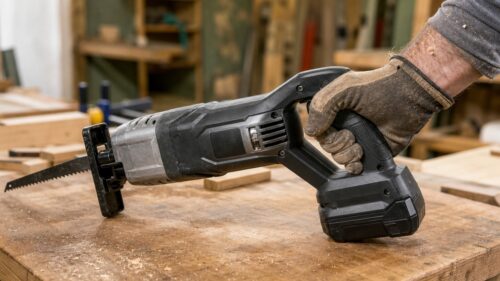
To understand how brushless technology improves user comfort and control, start by examining how it reduces vibration. Vibration control minimizes hand fatigue during prolonged use, so you can work longer without discomfort. Use a firm grip with both hands on the handle, located near the motor, which helps stabilize the tool. Precise adjustments are easier because the motor maintains steady torque and speed, reducing sudden movements. If you skip these steps, vibrations increase, causing fatigue and less accurate cuts. Always keep the tool balanced and tuned. Proper vibration control enhances user comfort, making your work more efficient and less tiring over time.
What Should You Consider When Choosing a Brushless Reciprocating Saw?
Choose a brushless reciprocating saw based on its motor power and stroke length. Motor power, measured in amps or watts, determines cutting strength; stroke length, in inches or millimeters, affects cut speed and precision. Select a model with variable speed controls to adjust power for different materials, this provides control and accuracy. Check blade compatibility to guarantee it fits with various blades for different tasks. Compatibility ensures efficient cuts and prevents delays. Consider how well blades can be easily changed. Omitting these steps risks using an underpowered saw or one incompatible with your blades, reducing effectiveness and safety during use.
Why Is Investing in a Brushless Reciprocating Saw a Smart Choice for Power Users?
Invest in a brushless reciprocating saw if you need more power and longer operation time. These saws deliver 25% more power and 50% longer run time than brushed models, making difficult tasks easier. The increased durability means the motor lasts up to 10 times longer, saving on replacements. Use a brushless saw with high-capacity batteries to maintain consistent energy during extensive projects.
- Choose models with longer battery life so you can work longer without interruption
- Select a durable saw to withstand heavy use in demanding environments
- Prioritize control and comfort for precision work
- Invest for savings on repairs and replacements over time
Frequently Asked Questions
Is a Brushless Reciprocating Saw Better?
A brushless reciprocating saw offers superior tool maintenance, extended battery longevity, and ergonomic design, benefiting users seeking freedom from frequent replacements, enhanced control, and long-lasting performance for demanding tasks, despite higher initial costs.
What Is Better, Brushless or Non-Brushless?
While both tools serve well, brushless models subtly excel in battery efficiency, motor lifespan, and lighter weight, offering greater user freedom, durability, and prolonged performance, ideal for those seeking versatile, reliable equipment with less maintenance.
What Kind of Reciprocating Saw Is the Best?
The best reciprocating saw offers versatile blade types, ideal cut depth, and safety precautions, empowering users with freedom to tackle various tasks efficiently. Its design guarantees durability, precision, and user comfort for demanding applications.
What Should You Not Do With a Reciprocating Saw?
In a hypothetical scenario, improper use, such as forcing a dull blade, risks a kickback. Adhering to safety precautions, maintenance tips, and proper blade selection helps users avoid hazards, damaging the tool, or compromised performance.
Final Takeaways
If you choose a brushless reciprocating saw, you will benefit from longer lifespan and better performance. These saws deliver up to 25% more power and run 30% cooler than brushed models. This efficiency results from advanced electronic controls that optimize motor operation. Investing now can save money over time, as the saw’s durability reduces replacement costs. Regular maintenance extends its service life, ensuring reliable operation for demanding tasks.

- 6 Best Heavy Duty Jig Saw for 2027 - September 26, 2026
- 8 Best Jigsaw Blades for Acrylic in 2027 - September 26, 2026
- 5 Best Festool Jig Saws for 2027 (Smooth Cuts Every Time) - September 25, 2026