
Start by understanding your reciprocating saw’s maximum cutting capacity, which is usually marked on the blade or detailed in the user manual. Knowing this limit is essential to prevent damaging the tool or risking unsafe results during use.
The depth and thickness of cuts your reciprocating saw can make depend heavily on the blade length and the material you’re working with.
Adjust your blade length to match the specific material, with typical blades capable of cutting up to 12 inches deep for thicker or denser materials. This helps avoid bending, breaking, or overloading the blade during operation.
When operating the saw, grip it firmly, ensuring your hands stay well away from the blade’s path until the tool is running smoothly and at full speed. Proper handling reduces the risk of slips or accidents while optimizing cutting precision.
For thicker or tougher materials, opt for coarser teeth or longer blades, which facilitate more efficient, aggressive cuts. Conversely, using finer teeth enhances control and provides cleaner, more precise cuts on thinner or delicate materials.
It’s important to remember not to force the saw into thick materials beyond its recommended capacity, as doing so can cause the motor to overload or the blade to break, leading to potential safety hazards and damage to the tool.
How Deep Can a Reciprocating Saw Cut in Wood and Metal?
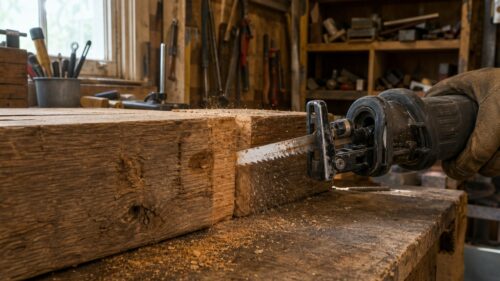
To determine how deep a reciprocating saw can cut into wood and metal, start by selecting the correct blade. The blade’s length governs the cutting depth, usually 4 to 12 inches. Choose a long, coarse-tooth blade for wood, which can cut 4-6 inches deep. For metal, select a blade with lower TPI (Teeth Per Inch), allowing up to 1/2 inch of steel or similar materials. When testing, verify the blade covers the material’s thickness without forcing the saw. Optimizing cutting performance can also help achieve better results.
- Use longer blades for thicker materials.
- Adjust blade type for specific materials.
What Factors Limit the Cutting Capacity of a Reciprocating Saw?
When using a reciprocating saw, understanding the factors that limit its cutting capacity helps guarantee safe and effective work.
Evaluate blade length: Always select a blade within the length that supports your workpiece. Longer blades allow deeper cuts but can cause blade bending or binding.
Check TPI and material toughness: Higher TPI blades excel at thin materials, while dense, tough materials need lower TPI blades and more powerful motors.
Monitor blade wear and workpiece support**: Worn blades reduce efficiency, and inadequate support can cause blade binding**.
Consider overall blade size: Larger blade sizes, including length and thickness, directly influence the cutting depth and control during operation.
How Do Blade Length and Tooth Style Affect Cutting Depth?
Selecting the right blade length and tooth style is essential for achieving maximum cutting depth. Use a long blade, up to 12 inches, so you can cut thicker materials with fewer passes. Choose a tooth configuration that matches your material; aggressive teeth with fewer TPI (teeth per inch), like 5-6 TPI, cut deeper and faster through heavy material. Fine teeth produce smoother cuts but limit depth. Adjust your blade design accordingly, long blades with rough teeth for fast, deep cuts or shorter blades for precise, shallow work. Always match blade length and tooth style to material thickness for safe, efficient cuts. Blades with specific tooth configurations are designed to optimize cutting performance based on material type and required finish.
How Does Material Type Impact Maximum Cutting Thickness?
Identify the type of material you plan to cut with your reciprocating saw. Material type affects cutting thickness because harder or denser materials need specific blades. Use these guidelines:
- Select blade material, like bi-metal or carbide, for desired metal cutting or woodworking.
- Choose TPI (teeth per inch); lower TPI (8-14) cut thicker or tougher materials.
- Opt for the correct blade length to reach the maximum thickness safely.
- Consider the tooth durability and heat resistance of your blade, especially when working with high-speed steel teeth, to prevent fractures during cutting.
How Do Saw Power and Technique Influence Cutting Depth?
To maximize cutting depth with a reciprocating saw, control the tool with steady pressure and smooth movements. Increase saw power, like a 15-amp motor, to cut through thicker materials, such as steel up to 1/2 inch. Use proper cutting technique: apply slow, controlled strokes to prevent blade binding and improve cutting efficiency. Keep the blade aligned correctly, avoiding lateral movements, to enhance depth and protect blade lifespan. Support the workpiece firmly, reducing vibration. Cutting slower and with precision prevents excessive heat, prolongs blade life, and guarantees full material penetration. Proper battery life management is also essential to maintain consistent performance during extended cuts. Always follow these steps for efficient blade and cutting performance.
Common Limitations for Cutting Firewood and Metal With a Reciprocating Saw
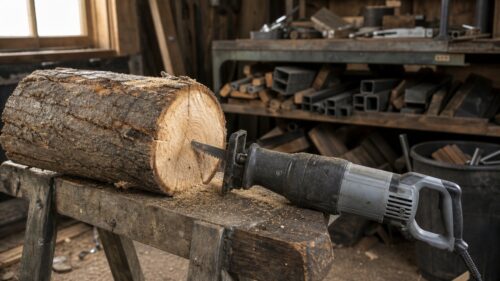
A reciprocating saw has inherent limitations when cutting firewood and metal. Its cutting depth depends on blade length, which ranges from 4 to 12 inches. For firewood, it can cut up to about 8 inches (20 cm). For metal, it handles materials up to ½ inch (12 mm). To ensure optimal results, consider cutting capacity when selecting blades and tools for your project.
To avoid damage, do not push beyond these limits. Use blades with a suitable blade TPI (teeth per inch) for your materials.
- Cutting deeper or thicker causes blade damage or overheating.
- Longer blades improve cutting depth but may limit maneuverability.
- For thicker or deeper cuts, switch to a chainsaw or circular saw.
Tips to Safely Maximize Your Reciprocating Saw’s Cutting Capacity
Using the right blades is essential to safely maximize your reciprocating saw’s cutting capacity. Select a blade type, such as carbide or bi-metal, designed for thick materials, to achieve deeper cuts without risking blade failure. Support the workpiece properly to prevent binding and stabilize the saw during deep cuts. Use slow, steady cutting techniques to improve control and avoid overheating, which can damage blades. Regularly check and replace dull blades to maintain efficiency and safety. Apply cutting lubricants or pause frequently to keep blades cool, especially when tackling thick materials, so you can cut safely and effectively at maximum depth.
Frequently Asked Questions
Can a Reciprocating Saw Cut Through Thick Wood?
Reciprocating saws can cut thick wood using versatile blades suited for material compatibility, but safety precautions and ergonomic design are essential. Noise levels and battery capacity affect cutting speed, requiring proper tool maintenance for effective, safe, and efficient performance.
Can I Cut a 4×4 With a Reciprocating Saw?
A reciprocating saw can cut a 4×4, provided it offers sufficient motor power, blade speed, and cutting angle control; safety precautions, grip stability, material versatility, and blade lifespan influence cutting accuracy and efficiency, supporting user freedom in diverse tasks.
How Thick Can a Sawzall Cut?
A Sawzall can cut up to half an inch thick, depending on blade quality, material, and technique. Ideal blade maintenance, safety precautions, appropriate power source, and ergonomic handling guarantee maximum cutting speed, longevity, and effective dust management.
What Should You Not Do With a Reciprocating Saw?
Avoid ignoring safety precautions, choosing improper blades, or rushing cutting techniques; neglecting tool maintenance or environmental factors can diminish the saw’s performance, risking harm. Proper usage, safety gear, and mindful power source management preserve freedom to work effectively and safely.
Final Takeaways
Assess your saw’s capabilities carefully before cutting. Always select the correct blade for the material, ensuring it matches the required length and tooth style. Use proper technique, applying steady pressure and support so the cut remains accurate. Protect yourself by wearing safety gear and working in a secure environment. Follow these steps diligently, as neglecting them risks damage to the saw or injury. Remember, safety and precision are essential to maximize your reciprocating saw’s efficiency.

- 6 Best Heavy Duty Jig Saw for 2027 - September 26, 2026
- 8 Best Jigsaw Blades for Acrylic in 2027 - September 26, 2026
- 5 Best Festool Jig Saws for 2027 (Smooth Cuts Every Time) - September 25, 2026