
A reciprocating saw can cut through steel and rebar, making it a versatile tool for demolition and renovation projects. To achieve effective and safe cuts, selecting the right blade is essential; opt for a bi-metal or high-speed steel blade with a teeth-per-inch (TPI) range of 8 to 24, depending on the material thickness and hardness.
Using steady, consistent pressure helps prevent blade binding, which can lead to kickback or blade breakage.
Securing the steel or rebar firmly before cutting is crucial to minimize movement during the process, ensuring cleaner cuts and reducing the risk of injury. If you skip these preparatory steps, you increase the chance of tool damage or incomplete cuts.
For thicker or hardened steel, consider longer blades or switching to alternative tools like angle grinders, which are better suited for tougher materials.
Always explore your saw’s capabilities and limitations to ensure safety and precision when working with steel or rebar. Proper technique and appropriate equipment will help you execute efficient cuts while maintaining safety and prolonging your tool’s lifespan.
Can a Reciprocating Saw Actually Cut Steel and Rebar?
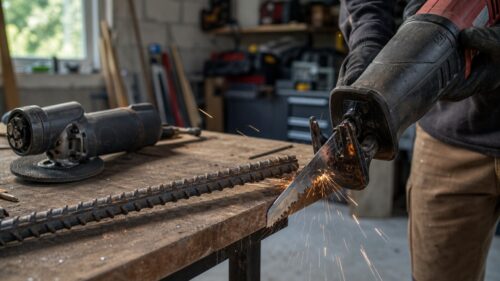
Can a reciprocating saw cut through steel and rebar? Yes, but only with the right metal-cutting blade. Use a bi-metal or high-speed steel blade, measuring 8-24 TPI, to improve your cut’s efficiency and reduce effort. Attach the blade securely to the saw, and follow the proper cutting technique: start slow, apply steady pressure, and keep the saw stable. If you rush, the blade may break, or the cut will be uneven. Always wear safety gear. Keep your hands on the saw’s handle, and cut in a controlled, steady motion until you fully cut through rebar or steel. Selecting the proper reciprocating saw blades for metal is crucial for achieving clean cuts and prolonging your tool’s lifespan.
Which Blades Are Best for Cutting Steel and Rebar?
Identifying the best blades for cutting steel and rebar is essential to achieve efficient and safe results. Choose reciprocating saw blades with teeth per inch (TPI) from 8 to 24, based on cut fineness. For cutting metal like rebar, utilize high-speed steel or bi-metal blades designed for metal with a reciprocating saw. These saw blades last longer and cut better. For thicker steel, select longer blades and cut at slower speeds. Use blades with larger teeth for fast, clean cuts. Always match the blade to the metal thickness and type. Proper blades guarantee safer, smoother, and more effective cutting of steel and rebar. Consulting blade materials can help you select the most durable options for heavy-duty metal cutting.
How Do Tooth Count and Pitch Affect Metal Cutting Results?
When choosing a blade for cutting metal, you must understand how tooth count and pitch influence the cut. The tooth count, or TPI (teeth per inch), determines the cut’s speed and finish. Use a blade with high TPI (20–24) for precision and smooth edges, suitable for detail work. Use low TPI (8–10) for rough, fast cuts through thick steel or rebar. The pitch, or distance between teeth, also matters. Closer teeth (higher TPI) give cleaner cuts; wider teeth (lower TPI) cut faster but more roughly. Select the right tooth count and pitch based on metal thickness and desired finish to optimize your cut quality. Teeth per inch (TPI) influences not only the cut quality but also heat buildup and chip clearance during cutting.
What Are the Best Techniques to Safely Cut Steel With a Reciprocating Saw?
Always wear safety gear before cutting steel with a reciprocating saw. Wear eye protection and gloves to guard against sparks and metal fragments. Select a high-quality bi-metal or high-speed steel blade with 8-24 TPI for cutting metal. Keep the saw at a steady, controlled speed; start slowly to prevent blade kickback. Apply gentle, consistent pressure, don’t force the blade through the metal, to let the saw’s power do the work. Secure the steel or rebar tightly with clamps or supports so it doesn’t move. Use smooth, controlled motions for safe, precise cuts, ensuring safety gear remains in place. Choosing the right reciprocating saw size and maneuverability can make the cutting process safer and more efficient.
What Are the Limitations of Using a Reciprocating Saw on Thick or Hardened Steel?
Using a reciprocating saw on thick or hardened steel has limitations you must understand before starting. The saw’s motor and blade durability determine success with thick steel and rebar.
- Cut slowly: Push the blade carefully so it doesn’t dull or break under stress.
- Expect longer cuts: Hardened metal or thick rebar may take extra time.
- Avoid standard blades: Use bi-metal blades designed for metal, but even these wear quickly.
- Know when to switch tools: For very thick or hardened steel, move to angle grinders or plasma cutters.
- Check the battery life: Extended cutting tasks on tough materials can drain the battery faster, so ensure your tool has sufficient power.
Failure to follow these tips could result in damaged blades or incomplete cuts.
How Can You Maximize Blade Life and Stay Safe While Cutting Metal?
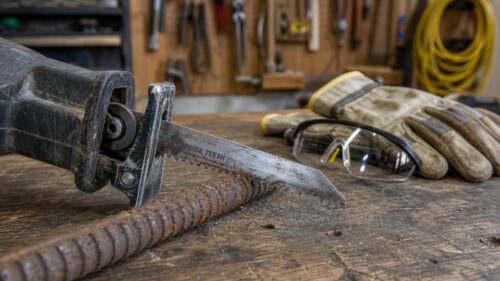
To maximize blade life and stay safe while cutting metal, use high-quality bi-metal blades with a TPI (teeth per inch) of 8 to 24, because these blades are designed for durability and efficient cutting. Always wear safety gear, including goggles, gloves, and hearing protection, so you guard against sparks, debris, and vibrations. Keep the reciprocating saw at lower speeds to prevent overheating and reduce blade wear. Apply gentle, steady pressure, so the blade can do the work, ensuring safety and longer blade longevity. Properly selecting the blade size and thickness can also improve control and cutting precision. Use sharp blades for cleaner cuts. Store blades properly to avoid damage.
Frequently Asked Questions
What Is the Best Reciprocating Saw Blade for Cutting Rebar?
The ideal reciprocating saw blade for rebar features durability, wider teeth for faster cutting, and material compatibility with steel. It balances cutting speed, noise levels, and safety precautions, ensuring efficient, safe rebar cutting with reliable performance and longevity.
Can I Use a Reciprocating Saw to Cut Rebar?
A reciprocating saw can cut rebar, provided proper safety precautions, suitable blades, cutting techniques, blade maintenance, and considering rebar sizes and power source are addressed; for precision, alternative tools may sometimes be preferable.
What Is the Best Tool to Use to Cut Rebar?
The ideal tool for rebar cuts is a high-quality reciprocating saw or rebar cutter, embodying strength and precision; safety precautions, blade compatibility, proper cutting techniques, and diligent maintenance forge the path toward mastery over material limitations.
How Thick Metal Can a Reciprocating Saw Cut?
Reciprocating saws can cut steel up to approximately 6 inches thickness, depending on blade durability, cutting speed, and metal compatibility, with safety precautions essential; thinner rebar is more efficiently handled, offering freedom for versatile projects.
Final Takeaways
Begin by choosing the right blade, symbolizing a key opening your task’s success. Hold the saw firmly, like grasping a sturdy bridge, to maintain control and safety. Use steady pressure, representing a steady foundation, to prevent blade breakage or kickback. Avoid rushing, acting as a cautious guide, to guarantee precise cuts and safety. Follow these steps carefully, and your work will resemble a well-built bridge, strong, reliable, and complete.

- 6 Best Heavy Duty Jig Saw for 2027 - September 26, 2026
- 8 Best Jigsaw Blades for Acrylic in 2027 - September 26, 2026
- 5 Best Festool Jig Saws for 2027 (Smooth Cuts Every Time) - September 25, 2026