
A reciprocating saw is a versatile power tool that can effectively cut through metal when equipped with the appropriate blade. Homeowners, DIY enthusiasts, and professionals often rely on this tool for demolition, plumbing, or metalworking projects, making understanding its capabilities essential for safe and efficient use.
Start by choosing the correct blade for cutting metal, typically a bi-metal or carbide-tipped blade designed for durability and precision. Secure the metal material tightly in place to prevent movement during cutting, since any looseness can cause the saw to bind or kick back unexpectedly.
Use steady, controlled pressure while operating the saw; applying too much force can damage the blade or compromise cutting accuracy.
For optimal performance, keep your hands on the saw’s handles and stay alert to the blade’s wear and temperature. Overheating or excessive wear can lead to blade breakage or inefficient cuts.
When working with thick metal, select a blade with a low TPI (6-10) for more aggressive cutting. Conversely, for thinner or softer metals, use a high TPI (18-24) blade to achieve cleaner, more precise cuts.
What Metal Thickness Can a Reciprocating Saw Handle?
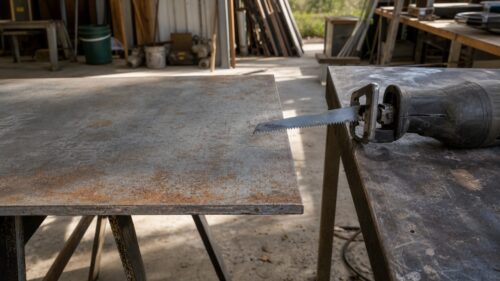
To determine what metal thickness a reciprocating saw can handle, start by selecting the correct blade. Use reciprocating saw blades designed for metal cutting, especially those for thick metal. These blades, often carbide-tipped or heavy-duty bi-metal types, handle up to 1/2 inch (12 mm) of metal. For thicker metals, choose specialized blades or alternate methods. Check the blade’s material, TPI count, and length, as these impact cutting ability. Lower TPI blades are better for thick metal, while higher TPI blades suit thinner materials. Always cut with the right blade to safely and effectively handle thick metal. Additionally, bi-metal construction enhances fracture resistance and heat tolerance, making the blades more durable during demanding cuts.
Which Blades Work Best for Cutting Metal?
Choose a blade designed specifically for metal cutting. Use bi-metal blades with 8-18 TPI (teeth per inch) for durability and smooth cuts, or carbide-tipped blades for tough, thick metals up to 12 inches. These blades are labeled “metal,” “metal cutting,” or “reciprocating saw blades, metal” for effective results. Select longer blades, up to 12 inches, for thicker materials. Use lower TPI (6-10) for dense, heavy metals, and higher TPI (18) for thinner metals. Proper choice assures blade life and ensures precise cuts. Always match blade type to your material to avoid premature wear or ineffective cuts. Blade compatibility is essential to maximize performance and lifespan.
How Does Blade TPI Affect Your Metal Cutting Results?
When cutting metal with a reciprocating saw, understanding how blade TPI (teeth per inch) affects results is essential. Higher TPI (18-24) creates smoother cuts in thin metals, while lower TPI (6-10) is for thicker, tougher materials. Use a high-TPI blade for fine work, and a low-TPI blade for heavy-duty tasks. Explore the differences below:
| TPI Range | Metal Type | Cut Quality | Heat Generation | Cutting Speed |
|---|---|---|---|---|
| 6-10 | Thick, tough metal | Rough edges, fast | More heat | Faster |
| 18-24 | Thin, delicate metal | Smooth, precise | Less heat | Slower |
Choose the right tooth count to optimize your metal cutting experience.
What Factors Impact Cutting Speed and Quality?
What factors influence the speed and quality of metal cutting with a reciprocating saw? First, select the right reciprocating blades with appropriate blade material; bi-metal or carbide blades last longer and cut more smoothly. Use blades with lower TPI, around 6-10, for faster cuts through thick metal. Adjust the saw’s speed setting to a lower rate to prevent overheating and keep cuts precise. Focus on steady hand control and moderate feed pressure to improve cut quality and avoid blade wobble. Longer blades increase reach and stability when cutting thicker metal or long distances. Always match blade type and blade length to your metal and project needs for best results. Understanding teeth per inch (TPI) can help optimize cutting performance by balancing speed, finish, and chip clearance.
How to Safely Cut Metal With Your Reciprocating Saw?
Always wear appropriate safety gear before starting to cut metal with a reciprocating saw. Protective safety gear, including eye protection, gloves, and earplugs, shields you from flying debris and loud noise. Choose the correct metal-cutting blade based on the metal’s thickness and type, making certain it has the right TPI and length. Secure the metal workpiece firmly and support it to prevent movement. Use a slow, steady motion and avoid forcing the saw. Inspect blades regularly and replace worn ones to maintain safety and precision. Ensuring you select a compatible reciprocating saw with sufficient power and durability is essential for safe and effective metal cutting. Following these steps helps prevent injuries and ensures safe, effective metal cutting with your reciprocating saw.
Tips and Techniques for More Efficient Metal Cutting
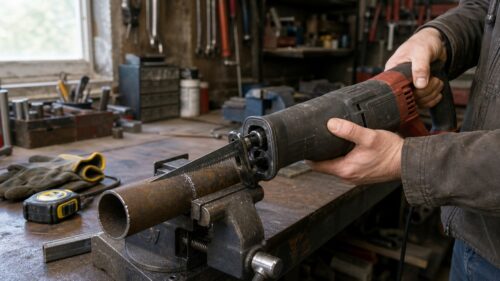
Using the correct blade is essential for efficient metal cutting. Select a SAWZALL blade with 6-10 TPI (teeth per inch) and 6-9 inches long, ideal for thick metals up to ½ inch. Start cutting slowly to let the blade bite into the metal and prevent overheating, or else the blade may wear out quickly. Support the metal securely to reduce vibration and improve cut quality. Keep blades cool by stopping briefly or applying cutting fluids. Maintain steady, controlled strokes, avoiding excessive force, so you last longer with less fatigue. Additionally, understanding and managing heat buildup is crucial because high temperatures can lead to blade wear and impact cutting performance.
Frequently Asked Questions
How Thick Metal Can a Reciprocating Saw Cut?
A reciprocating saw can cut metal up to approximately 1/2 inch (12mm) thick, depending on blade compatibility; higher TPI blades improve cutting efficiency on thinner metals, while specialized blades enable tougher, thicker materials to be cut more effectively.
What Should You Not Do With a Reciprocating Saw?
Neglecting safety precautions, improper blade maintenance, or rough handling techniques can lead to injuries or equipment damage. Users should follow safety protocols, maintain blades properly, and handle the saw with care to guarantee safe, effective metal cutting.
What Reciprocating Saw Blade Cuts Metal?
Reciprocating saw blades designed for metal, such as bi-metal or carbide-tipped blades, guarantee blade compatibility, promote safe metal cutting, and enhance efficiency through proper techniques, allowing freedom in working with various metal types while maintaining safety and precision.
Which Reciprocating Saw Is Best for Cutting Through Metal?
Reciprocating saws with high-amp motors, versatile blade types, and ergonomic features excel at cutting metal, provided safety precautions are followed and regular maintenance guarantees ideal performance for freedom in tough tasks and precise results.
Final Takeaways
Start the cut steadily, guiding the blade like a steady hand shaping a sculpture. Know that proper technique, using the right blade, steady pressure, and safety gear, helps achieve a clean, safe cut. When you follow these steps, your saw becomes a tool that transforms raw metal into precise parts, like a chisel shaping stone. If you fail to follow instructions, the metal may crack, the blade may break, or injury could occur.

- 6 Best Heavy Duty Jig Saw for 2027 - September 26, 2026
- 8 Best Jigsaw Blades for Acrylic in 2027 - September 26, 2026
- 5 Best Festool Jig Saws for 2027 (Smooth Cuts Every Time) - September 25, 2026