
A reciprocating saw is a versatile power tool commonly used for demolition and remodeling projects, and it can indeed cut wood effectively. This tool features a back-and-forth blade motion that makes it suitable for rough cuts in various types of wood, such as softwood, framing lumber, or plywood.
When using a reciprocating saw to cut wood, it’s crucial to select the correct blade. Choose a blade specifically designed for woodcutting or one with teeth suited for fast, aggressive cuts. Make sure to grip the saw firmly, with one hand on the handle and the other guiding the tool along your cut line for better control and accuracy.
Stick to cutting softer types of wood or framing lumber, as denser woods, large logs, or hardwoods may require more specialized equipment like chainsaws or circular saws. Understanding these limitations helps ensure safety and efficiency during your project.
Proper technique is essential for extending blade life and ensuring safety. Always follow manufacturer instructions, keep the blade well-maintained, and operate the saw at the appropriate speed and pressure.
By adhering to these steps, you can achieve clean, safe cuts in wood using a reciprocating saw, maximizing its utility while minimizing hazards.
Can a Reciprocating Saw Cut Wood Effectively?
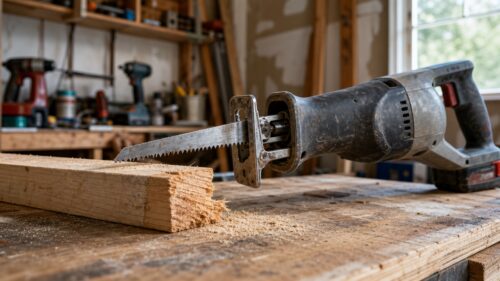
To determine if a reciprocating saw can cut wood effectively, you must understand its capabilities. Use the right reciprocating saw blades, which are essential for cutting wood. These blades, with lower TPI (teeth per inch), enable faster cuts. Make certain the blade is sharp and appropriate length, usually 6-12 inches. Hold the saw firmly and cut at a steady pace. Avoid forcing the blade, which can cause jams or damage. Note that reciprocating saws are best for small, quick cuts. They lack the power and precision of chainsaws for large or thick wood, so adjust your expectations accordingly.
Which Blades Are Best for Cutting Wood With a Reciprocating Saw?
Choosing the right blade is essential for cutting wood effectively with a reciprocating saw. Use Wood Blades with a low TPI (teeth per inch) of 6-10 for fast, rough cuts. For thicker or tougher wood, select bi-metal blades with a TPI around 14 for better durability. Multi-material blades with a TPI of 10-14 work well when cutting wood along with plastic or embedded metal. Use a Wood Blade suited to your project, or else the cut will be rough, or the blade will dull quickly. Always select the blade matching your wood cutting needs to guarantee clean, efficient results. Additionally, using a powerful reciprocating saw can improve precision and reduce cutting time.
Can I Use Metal Blades on Wood? Pros and Cons
Using metal blades on wood is possible, but it is not recommended as the primary choice. Use metal blades when cutting reclaimed wood or pallets with embedded nails, as they handle metal better. Metal blades cut more slowly and dull faster on regular wood, so expect rougher edges and less efficiency. To avoid damage, do not rely on them for thick or untreated wood. Instead, opt for blades designed for wood cutting, which provide cleaner cuts and higher speed. If choosing metal blades, recognize they are suited for specific tasks and do not replace specialized wood blades for general or large projects. Additionally, consider reciprocating saw blades for cutting tree roots, which are designed for rugged, efficient cuts in tough materials like roots and wood.
How Does Tooth Count (TPI) Affect Cutting Speed in Wood?
When selecting a saw blade for woodworking, consider its teeth per inch (TPI). Higher TPI blades produce finer cuts but cut more slowly. Lower TPI blades, with fewer teeth, remove material faster, increasing cutting speed. Use the table below for clarity:
| TPI Range | Cutting Style |
|---|---|
| 6-10 | Aggressive, rapid cuts |
| 10-20 | Smoother, detailed cuts |
| Above 20 | Very fine, finish cuts |
Adjust TPI based on your needs: lower for rough work, higher for smooth finishes. Proper TPI selection ensures the right balance between speed and quality. Additionally, understanding how tooth count influences heat and chip clearance can help optimize performance and lifespan of the blade.
When Should You Use a Dedicated Wood Blade?
Begin by evaluating the type of material you will cut. Use a dedicated wood blade when cutting softwood or hardwood, especially when avoiding embedded metal.
- Select a wood blade with lower TPI (6-10) for aggressive cuts and efficient material removal. Use this for large, thick, or tough wood.
- Choose a wood blade when precision and smooth edges matter most. It ensures cleaner cuts with less splintering.
- Switch to a wood blade to prevent dulling and damage if nails or embedded metals are present. This preserves your saw’s efficiency.
- Consider the tooth configuration of the blade, as this significantly impacts cutting speed, clean finish, and durability, especially when working with wood.
What Factors Should I Consider When Choosing a Saw Blade for Wood?
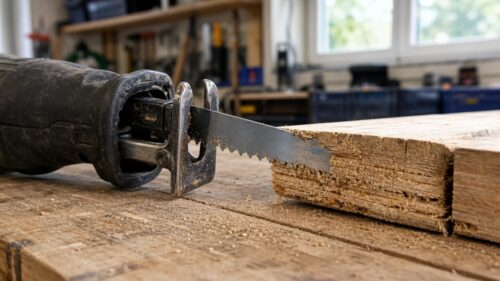
Choosing the right saw blade for wood depends on several important factors. You must select the proper blade during the blade selection process. Use low TPI blades, between 6-10, for fast, aggressive cutting of softwood. High carbon steel blades are best for durability and efficient wood cutting. Consider the thickness and hardness of the wood; thicker, harder wood needs sturdier blades. For cutting through embedded nails or metal, choose bi-metal or carbide-tipped blades. Guarantee the blade length and width fit your saw and the wood’s size. Making these choices correctly allows safe, smooth cutting, or else blades may break or cut poorly. Additionally, selecting blades specifically designed for pallet demolition ensures optimal performance when cutting through nails and tough materials in pallets.
How Do Material Thickness and Density Influence Cutting Choices?
Assess the thickness and density of the wood before selecting your saw blade. The material density, which measures how tightly its molecules are packed, influences your cutting choice. A denser material typically requires a specialized blade design to cut effectively.
Evaluate wood thickness and density to choose the appropriate saw blade for safe, efficient cutting.
- Choose the right blade: Use lower TPI blades for softer, thinner wood to prevent jams and overheating. For dense hardwoods, opt for higher TPI blades or more durable tools.
- Adjust your tool: Thicker, denser wood needs a more powerful saw, like a chainsaw, to avoid damage and ensure safety.
- Monitor progress: Dense materials slow down the saw, increasing blade wear. Replace blades regularly to keep cuts clean and safe.
What Are the Best Practices for Cutting Wood Safely and Efficiently?
When cutting wood with a reciprocating saw, always follow safe and efficient practices to prevent accidents and guarantee a quality cut. Use reciprocating blades designed for woodworking, with lower TPI for fast, clean cuts. Keep your blade sharp and securely attached before starting. Wear safety gear like gloves and eye protection to guard against debris. Use a steady, controlled motion and avoid forcing the saw to prevent kickback or binding. Cut at a manageable speed, especially on thicker wood. Properly maintained blades will last longer and produce better results. Always stay alert, and stop if the saw binds or becomes difficult to control.
How Do Cutting Speed and Pressure Impact the Quality of Your Cuts?
Controlling cutting speed and pressure is essential to get a good cut with a reciprocating saw. You must set the right cutting speed, balancing it against pressure to avoid rough edges.
- Adjust the saw’s speed dial or control to match the wood’s thickness, so the cut is smooth.
- Apply steady, moderate pressure, pressing too hard causes blade bending, too softly produces jagged edges.
- Maintain consistent pressure and speed until the cut is complete, or else uneven cuts and blade damage occur.
Use moderate pressure with an appropriate cutting speed to ensure cleaner cuts and longer blade life.
Can a Reciprocating Saw Handle Hardwoods and Large Logs?
Using a reciprocating saw to cut hardwoods and large logs can be challenging because these tasks require more power and stability. The reciprocating saw’s limited depth and low torque make it less effective. It can jam or overheat when cutting dense materials. Here’s a guide:
| Action | Purpose | Notes |
|---|---|---|
| Install a wood blade | Guarantee efficient cutting on hardwoods. | Use blades with fine teeth. |
| Apply steady pressure | Keep the cut smooth, avoid jamming. | Do not force the saw. |
| Use specialized tools | For large logs, chainsaws work better. | Reciprocating saws are less suitable. |
| Keep the saw straight | Prevent binding and ensure accuracy. | Slight angles cause jams. |
| Stay safe | Power tools can be dangerous; wear goggles and gloves. | Follow all safety rules. |
When Is It Time to Switch to a Different Tool?
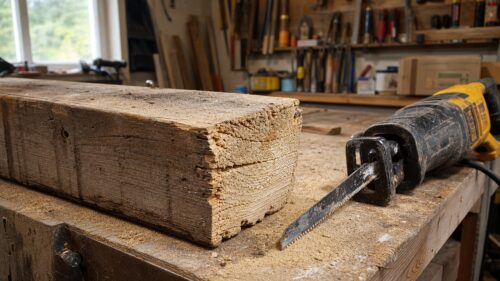
If the reciprocating saw struggles to cut through thick or wide wood, it is likely time to switch to a different tool.
- Switch when jamming occurs frequently. This indicates the saw cannot handle larger or denser wood, risking damage or injury.
- Switch during extended cuts in large branches or logs. A chainsaw offers better speed and safety, preventing fatigue.
- Switch when cutting metal-reinforced or nail-embedded wood. These materials dull blades quickly and are not suited for reciprocating saws.
Always choose the right tool to guarantee safety and efficiency.
Tips for Extending Blade Life When Cutting Wood
Maintaining a sharp and clean blade is essential to extending its life when cutting wood. Use blades with a high TPI (teeth per inch), ideally 6-10, for efficient cuts and less wear. Support the saw firmly and avoid forcing cuts, which cause stress and dull the blade faster. Limit cutting depth to the blade’s capacity, preventing overexertion and breakage. Regularly inspect and clean the blade to remove debris and buildup. Use safety gear and maintain consistent speeds to minimize blade vibration.
| Action | Reason |
|---|---|
| Keep blade clean | Prevent dulling from debris buildup |
| Use correct TPI | Enhance cutting speed and blade lifespan |
Are There Better Tools for Precision or Heavy-Duty Wood Cutting?
For tasks requiring precision or heavy-duty wood cutting, select the appropriate tool to improve efficiency and accuracy. Use tools with suitable types of blades for each purpose.
- Choose a jigsaw or carving saw for fine, controlled cuts, these blades offer better control.
- Use chainsaws for heavy-duty tasks, handling thicker logs efficiently without jamming.
- Opt for circular or table saws for large, professional jobs, these blades produce faster, cleaner cuts.
Always match types of blades to the material and task. This guarantees cleaner results and reduces errors or damage to tools.
Frequently Asked Questions
What Should You Not Do With a Reciprocating Saw?
The person should not force the saw, use it without safety gear, cut materials it’s not designed for, operate with a dull blade, or cut large, dense wood without stabilization, all essential safety precautions for safe, effective reciprocating saw use.
Will a Reciprocating Saw Cut Through a 2×4?
A reciprocating saw can cut through a 2×4, provided proper tool maintenance, suitable blades, and technique are employed. Users seeking freedom in DIY projects benefit from regular blade checks, safe handling, and understanding saw capabilities for efficient wood cutting.
How Thick of Wood Can a Reciprocating Saw Cut?
Like a nimble explorer traversing narrow caves, a reciprocating saw’s material limitations restrict its reach to about 4 inches in thickness, beyond which it stalls, urging the free spirit to seek more suitable , or powerful , tools for larger journeys.
Can I Cut Plywood With a Reciprocating Saw?
A reciprocating saw can cut plywood effectively with a suitable wood blade, but blade longevity depends on quality and use. Steady pressure and proper technique guarantee cleaner cuts and extend blade life, offering a satisfying, freedom-filled woodworking experience.
Final Takeaways
If you follow proper technique, a reciprocating saw can cut wood effectively for rough jobs. It is ideal in tight spaces or demolition tasks but not for precision or dense hardwoods. Always select the correct blade size and tooth count to match your project. Use safety gear and avoid forcing the saw. When tasks become too demanding, switch to tools like a circular saw or chainsaw. Proper use guarantees your tool’s life and ensures safe, efficient work.

- 6 Best Heavy Duty Jig Saw for 2027 - September 26, 2026
- 8 Best Jigsaw Blades for Acrylic in 2027 - September 26, 2026
- 5 Best Festool Jig Saws for 2027 (Smooth Cuts Every Time) - September 25, 2026