
A reciprocating saw can indeed cut aluminum, making it a versatile tool for DIY projects, home renovations, and metalworking tasks. To achieve clean and precise cuts, it’s essential to use the correct blade designed specifically for aluminum, such as a bi-metal or carbide-tipped blade. These blades are engineered to handle the softer, denser properties of aluminum without dulling or breaking easily.
When cutting aluminum with a reciprocating saw, operate the saw at a slow, steady speed to ensure accurate cuts and to prevent the blade from binding or catching. Proper support of the aluminum piece is crucial , secure it firmly to avoid movement or kickback during cutting, which can cause accidents or uneven cuts.
Select a blade with an appropriate length, generally between 6 to 12 inches, and choose a Tooth Per Inch (TPI) setting suitable for your material: a lower TPI for thicker aluminum for more aggressive cuts, or a higher TPI for smoother, finer edges on thinner materials.
Skipping any of these steps can increase the risk of damage to the blade or material, and it may pose safety hazards. Carefully following these guidelines helps ensure both the quality of your cut and your safety during operation.
Can a Reciprocating Saw Cut Aluminum? What You Need to Know
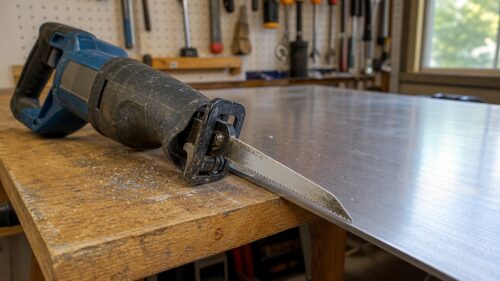
A reciprocating saw can cut aluminum if you use the right blade and technique. Choose a blade designed for metal, such as bi-metal or carbide-tipped blades, with the correct teeth per inch (TPI). Higher TPI blades create cleaner cuts and reduce snagging. Set the saw to a slow, steady speed and apply gentle pressure, this prevents overheating and bending. Regularly inspect and replace dull blades to maintain cutting efficiency. Follow safety measures, such as wearing eye protection. Use proper technique to guarantee smooth cuts and avoid accidents. A well-selected blade paired with proper safety steps guarantees effective, safe aluminum cutting. Additionally, understanding the material properties of aluminum, such as its softness and malleability, can help optimize your cutting approach.
How to Choose the Right Blade for Cutting Aluminum
Choose the right blade for cutting aluminum by first selecting a bi-metal blade with 60 to 100 teeth per inch (TPI). This guarantees a clean, precise cut. Use blades with a positive rake angle to reduce resistance and improve surface quality. The blade material and teeth configuration should be rated for non-ferrous metals like aluminum to avoid chipping. Check the blade regularly for dullness; replace it when necessary to prevent overheating and maintain accuracy. Additionally, understanding how teeth per inch (TPI) impacts chip clearance and heat generation can help optimize your cutting performance.
What TPI Is Best for Cutting Aluminum and Why
Determining the best TPI for cutting aluminum is essential for achieving clean, efficient cuts. Use blades with 10 to 14 TPI (teeth per inch) for a good balance of cutting speed and smooth edges. If you want faster cuts through thick aluminum, choose blades with lower TPI; if you seek smooth cuts with less burrs, select higher TPI blades. Keep your blade selection aligned with aluminum type and thickness. Higher TPI blades offer cleaner cuts but clog faster. Lower TPI blades cut quickly but produce rough edges. Adjust the reciprocating saw’s speed for maximum results. Always wear safety gear and check blades regularly to prevent binding or breakage. Performance and durability are key factors when selecting the right blade for aluminum cutting.
Selecting the Best Blade Length and Width for Your Aluminum Project
When selecting a saw blade for cutting aluminum, consider the blade’s length and width to match your project needs. Use a reciprocating saw with a blade length between 6 to 12 inches for control and reach. Choose a narrow blade, about 1/4 inch wide, for precise and curved cuts. Longer blades are best for straight cuts over large sections or flush cuts. Match the blade size to the aluminum’s thickness and cut type. For thin aluminum sheets, prefer shorter, narrower blades to reduce vibration. Additionally, bi-metal construction ensures the blade’s durability and heat resistance during cutting tasks.
How to Secure and Prepare Aluminum for Safe Cutting
To securely prepare aluminum for cutting, start by firmly clamping or placing it in a vise. Use clamps or a work surface to prevent movement, so the aluminum stays stable during cutting. Mark the cutting line accurately with a marker or measuring tape, ensuring precision. Support the aluminum properly to avoid bending or vibrations that could affect the cut. Wear safety gear, including gloves and goggles, to protect against shards and sparks. Clear the work area of debris and obstacles to reduce hazards. Proper securement and preparation are essential for safe, clean cuts with a reciprocating saw. Additionally, choosing the right reciprocating saw blades designed for aluminum will improve cutting efficiency and safety.
Step-by-Step: How to Cut Aluminum Safely With a Reciprocating Saw
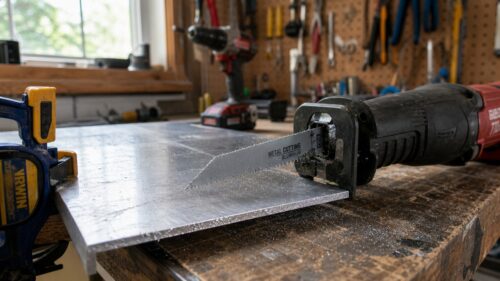
Begin by installing the correct blade on the reciprocating saw, such as a high TPI (teeth per inch) blade or carbide-tipped blade, designed to cut aluminum smoothly. Securely clamp the aluminum workpiece to prevent movement, or else the cut may be inaccurate or unsafe. Set the reciprocating saw to a lower speed, around 1500-2500 RPM, to avoid excessive heat and blade wear. Apply steady, gentle pressure, not forcing the saw, to prevent blade bending or breakage, and keep the saw steady to control metal chips and debris. Wear protective gear, including goggles, gloves, and a dust mask, to safeguard against debris and sparks. Additionally, understanding reciprocating saw blade sizing helps ensure you select a blade with the appropriate length and thickness for your project.
Common Challenges When Cutting Aluminum and How to Fix Them
Cutting aluminum presents several common challenges that can affect the quality and safety of your work. When using a reciprocating saw, choose the right blade to prevent rough edges or excessive blade wear. A blade with too few teeth causes burrs, while too many slows down cutting. Heat buildup can warp or melt aluminum; avoid this by reducing cutting speed or cooling. Secure the workpiece tightly to prevent wobbling, which can damage the blade. For thick aluminum, select a powerful saw and durable blade to avoid binding or breakage. Address these cutting challenges by adjusting blade selection, workpiece security, and technique for safer, cleaner cuts.
Should You Use Lubrication or Cooling When Cutting Aluminum? Tips for Better Results
Using lubrication or cooling during aluminum cutting improves the overall quality of the cut and prolongs tool life. Apply cutting lubricant, such as cutting oil or beeswax, to reduce friction. Use water-based coolants or sprays for better heat dissipation, which prevents warping and melting. Proper lubrication enhances cutting performance by making the process faster and smoother. Always choose a lubricant compatible with aluminum to prevent oxidation or corrosion. Focus on the cutting surface and blade area. Do not skip lubrication, as excessive heat causes blade wear and poor cut quality. Regularly inspect the lubricant to guarantee effective heat control and efficient cuts.
Key Differences Between Aluminum and Steel in Cutting Applications
When working with different metals like aluminum and steel, recognize their distinct properties and adjust your method accordingly. Aluminum is light, soft, and easier to cut with a reciprocating saw and blade. It quickly dissipates heat, so reduce cutting speed to prevent melting. Steel, being harder and more rigid, needs a tougher blade and more force. Use different cutting techniques: aluminum requires gentle pressure, while steel demands steady, firm force. Pay attention to safety considerations, including proper blade choice and heat management. Adapting your approach guarantees successful, safe cutting that respects each metal’s unique metal properties and heat dissipation features.
Why Proper Workpiece Support Matters When Cutting Aluminum
To make safe and precise cuts, always support the aluminum properly before starting. Supporting aluminum prevents vibrations, wobbling, and blade instability during cutting with reciprocating saws. This leads to cleaner, straighter cuts and reduces heat buildup that can cause warping. Proper support also extends blade life by decreasing undue wear. When supporting aluminum, ensure it is securely clamped and stable. Without proper workpiece support, aluminum may shift or bend, increasing safety risks and compromising cut quality. Proper supporting aluminum creates ideal cutting conditions, helping you achieve precise cuts safely.
| Support Level | Cutting Quality | Safety Impact |
|---|---|---|
| Stable | Cleaner, straighter cuts | Reduces accidents |
| Unstable | Wobbly, uneven cuts | Increases risk |
| Perfect | Precise, safe cuts | Ensures safety |
Safety Tips: Protect Yourself During Aluminum Cutting Projects
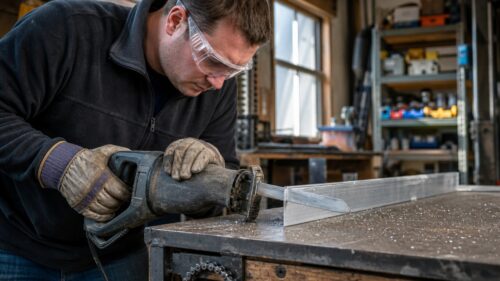
Wear safety glasses whenever cutting aluminum with a reciprocating saw. They protect your eyes from flying metal chips and sparks. Use gloves rated EN 388 level 3 or higher; they prevent cuts from sharp edges and blades. Make sure proper ventilation to avoid inhaling dust and fumes during cutting. Secure the aluminum piece firmly with clamps to prevent movement or kickbacks. Operate the saw at a steady speed, usually medium, so you avoid mishaps. When cutting aluminum, always use sharp blades for safer, cleaner cuts. Wear personal protective equipment at all times, eyewear, gloves, and proper clothing, to safeguard yourself and enjoy your work with confidence.
When and How to Replace Your Saw Blade for Optimal Cutting Performance
Knowing when to replace your reciprocating saw blade is essential for safe and effective cutting. Change the blade when you notice dullness, shiny or rounded teeth, or difficulty cutting aluminum. For best cutting performance, switch blades after every 10–15 cuts on hard metals. Regular saw blade inspection helps detect chips, cracks, or bending, replace immediately to avoid accidents. Use the appropriate blade recommended by the manufacturer, designed for metal cutting. Proper blade storage and cleaning prevent rust and prolong lifespan. Follow safety precautions, and always install blades securely.
Replace your reciprocating saw blade when dull, damaged, or after 10–15 cuts to ensure safe, efficient metal cutting.
- Dull, shiny, or rounded teeth
- Difficulty making sharp cuts
- Visible damage like chips or cracks
- Overheating during use
- After recommended number of cuts
Frequently Asked Questions
How to Cut Aluminum With a Reciprocating Saw?
Cutting aluminum with a reciprocating saw involves selecting durable bi-metal or carbide blades with high TPI, using slow, steady speed settings, ensuring safety gear, preparing the surface, and employing precise cutting techniques for smooth edges and noise reduction.
What Is the Best Reciprocating Saw Blade for Cutting Aluminum?
The best reciprocating saw blade for aluminum, like a skilled artist’s brush, balances blade compatibility, cutting speed, and durability. It suits material thickness, minimizes noise, guarantees safe installation, and maximizes cutting accuracy for free-flowing projects.
What Is the Best Tool to Cut Aluminum?
The ideal tool varies with aluminum thickness, focusing on saw blade durability, safety, vibration control, cutting speed, and compatible power tools; proper blade installation guarantees a smooth cut surface finish while maintaining safety precautions and efficient operation.
What Is the Easiest Way to Cut Aluminium?
The easiest way to cut aluminum involves using a reciprocating saw with a high-quality, fine-tooth blade, supplemented by lubricant, steady pressure, and secure positioning, empowering individuals to shape, drill, or weld aluminum freely without rusting or deformation.
Final Takeaways
When cutting aluminum with a reciprocating saw, always select the correct blade with the appropriate TPI and length. Secure your workpiece firmly and operate the saw at a steady, slow speed with gentle pressure. Wear safety gear such as goggles and gloves. Check your blade regularly and replace it when dull or damaged. Follow these steps precisely; otherwise, you risk poor cuts or injury. Proper technique and safety measures guarantee a clean cut every time, like guiding a steady hand through a smooth path.

- 6 Best Heavy Duty Jig Saw for 2027 - September 26, 2026
- 8 Best Jigsaw Blades for Acrylic in 2027 - September 26, 2026
- 5 Best Festool Jig Saws for 2027 (Smooth Cuts Every Time) - September 25, 2026