
A reciprocating saw can be used to cut cast iron pipes, but choosing the right blade is essential for a safe and effective cut. Opt for a carbide-tipped or diamond-edged saw blade specifically designed for cutting cast iron to ensure durability and clean cuts.
Secure the pipe firmly in place to prevent movement during cutting, as vibrations can cause cracks or damage to the pipe. Use steady, moderate strokes and apply gentle pressure to avoid overheating or damaging the blade.
When performing longer cuts, keep the blade cool by occasionally stopping and cooling it in water. Proper support and blade selection are crucial, failing to choose the right blade may result in poor cuts or blade damage, while skipping support increases the risk of cracking the cast iron pipe.
What Makes Cutting Cast Iron Pipe Challenging?
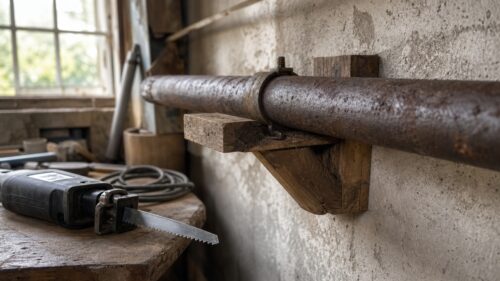
When cutting cast iron pipe, start by choosing the right tool, such as a reciprocating saw with a carbide-grit blade. Cut carefully because cast iron is very hard, brittle, and prone to cracking. It resists force, dulls blades quickly, or else breaks them during cutting. Generate heat, so keep the saw moving constantly; overheating can warp or weaken the pipe. Vibrations and chipping are common, making precise cuts difficult. To avoid accidents, use deep, steady strokes without forcing the saw. Proper blade sizing and selection are essential for safety and efficiency when working with tough materials like cast iron.
Can a Reciprocating Saw Cut Cast Iron Successfully?
A reciprocating saw can cut cast iron successfully if you use the right blade and follow proper technique.
- Choose the correct blade, diamond or carbide-grit blades cut cast iron efficiently.
- Secure the pipe, clamp it firmly to prevent movement, ensuring safer, cleaner cuts.
- Use steady pressure, push slowly, maintaining control to avoid blade dulling or injury.
- Work gradually, cut in short, controlled strokes, so the blade does not overheat or break.
- Verify blade compatibility, ensure the blade shank or tang design fits your saw’s chuck retention system for safe operation.
- Avoid forcing the saw; let the blade do the work.
- Wear safety gear, gloves and goggles for protection.
What Are the Best Blades for Cutting Cast Iron Pipes?
The best blades for cutting cast iron pipes are those specifically designed for heavy-duty metalwork. Use a carbide-tipped blade, as it withstands intense heat and resists dulling. For cleaner cuts, select a diamond-edged blade, which provides speed and precision. Choose blades with 8-10 teeth per inch (TPI), these balance aggression and control. Avoid bi-metal blades; they dull quickly and risk failure. Always use a blade made for metal or cast iron to guarantee its lifespan and reduce sparks. Properly match the blade to the pipe’s thickness to assure efficient, safe cuts and prevent damage to the tool or material. Additionally, selecting a blade with high heat resistance can significantly improve cutting performance when working with tough materials like cast iron.
How Does Tooth Pitch (TPI) Affect Cutting Cast Iron?
Identify the appropriate tooth pitch (TPI) for cutting cast iron pipes. Use blades with 8 to 10 TPI, as this balances speed and control. Higher TPI, like 10, provides a finer cut and prevents chipping. Lower TPI, such as 6, cuts faster but makes rough edges. To maximize efficiency and avoid damage, select an 8 TPI blade. Proper blade selection techniques are crucial for managing dust, vibration, and heat during cutting.
Which Reciprocating Saw Blades Are Ideal for Cast Iron?
When selecting reciprocating saw blades for cutting cast iron, prioritize those specifically designed for tough metals. Use carbide-tipped blades, which resist dulling and handle the metal’s hardness. Choose blades with 8-10 teeth per inch (TPI) to balance aggressive cutting and longevity. A universal 1/2-inch shank ensures compatibility with most heavy-duty saws. Avoid bi-metal blades unless rated for tough metals, as they dull quickly. Diamond-tipped blades excel but are more costly; carbide-tipped options offer reliable durability. Using blades with optimized tooth configuration ensures maximum control and safety, so cuts are cleaner and faster, otherwise, blades may dull or break.
How Do You Set Up Your Reciprocating Saw for Cast Iron?
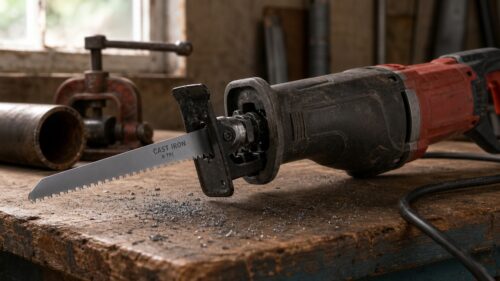
To set up a reciprocating saw for cutting cast iron, attach a carbide-tipped or diamond-grit blade designed for metal or cast iron. Make certain the blade is securely seated in the saw’s chuck and tightened properly to prevent slipping. Set the saw to a steady, moderate speed, so the blade cuts smoothly without overheating or dulling. Support and stabilize the pipe to reduce vibrations, or else the saw may slip and cause uneven cuts. Wear safety gear such as gloves, eye protection, and a dust mask to guard against shards and dust. Proper blade selection ensures optimal performance and longevity of the tool when cutting tough materials like cast iron. Follow these steps to gain full control and make safe, precise cuts.
What Techniques Ensure Safe and Clean Cuts in Cast Iron?
Guarantee a safe and precise cut by carefully preparing and following proper techniques. Secure the cast iron pipe with clamps or a vise to prevent movement, so the saw remains stable and reduces kickback risks. Use a diamond-tipped blade on the reciprocating saw for faster, cleaner cuts. Apply steady, even pressure, avoiding sudden pushes, or else the pipe might chip or crack. Keep the pipe dry and clean for better blade grip and less heat. Wear safety gloves and eye protection, preventing injuries from debris. For precision, mark the cut line clearly, and cut at a consistent speed.
| Step | Purpose | Critical Tips |
|---|---|---|
| Secure pipe | Prevents movement and kickback | Clamp tightly; pipe should not shift or wobble |
| Use quality blade | Ensures cleaner, faster cuts | Diamond-tipped blades cut cast iron pipes efficiently |
| Maintain steady pressure | Avoid chipping or cracking pipe | Push the saw smoothly; avoid sudden or uneven movements |
How Does Pipe Support and Position Impact Cutting Safety?
Proper support and positioning of a cast iron pipe are essential for safe cutting.
Follow these steps to verify support:
- Secure the pipe with clamps or a vise so it doesn’t move.
- Movement causes slips, or else accidental injury.
- Check that the pipe is level and stable before starting.
- Instability can lead to uneven cuts or pipe damage.
- Keep the pipe supported along its entire length.
- Support distributes weight evenly, or else causes stress and breaks.
- Hold the saw firmly, keeping your hands away from the blade.
- Poor control increases risk of slips or kickback.
What Common Problems Occur When Cutting Cast Iron: and How to Avoid Them?
When cutting cast iron pipes, many common problems can occur if proper techniques are not adhered to. Use the correct blade, designed specifically for cast iron, or else it may break, resulting in uneven cuts or pipe damage. Overheating the blade or pipe causes fractures and weakens the material. Secure the pipe tightly to prevent movement, which can lead to inaccurate cuts. Vibration from a dull or inappropriate blade can cause cracking or shattering. Always choose a sharp, cast-iron-compatible blade to avoid breakage and guarantee clean cuts. Proper technique minimizes risks and prevents costly damage during your project.
How Long Do Reciprocating Saw Blades Last When Cutting Cast Iron?
How long do reciprocating saw blades last when cutting cast iron? The lifespan depends on blade quality and pipe thickness. Typically, blades last between 5 to 15 cuts. High-quality carbide-tipped blades may cut through multiple 4-inch cast iron pipes before dulling. Diamond–grit blades can make over 20 cuts without dulling. Improper use, such as excessive pressure or cutting brittle cast iron, shortens blade life. To guarantee lifespan, inspect blades regularly for wear and edge damage. Choose the right blade for your job, and avoid forcing the saw. Proper technique ensures more cuts and better results, keeping your work efficient and safe.
Are There Better Tools for Cutting Cast Iron Pipes?
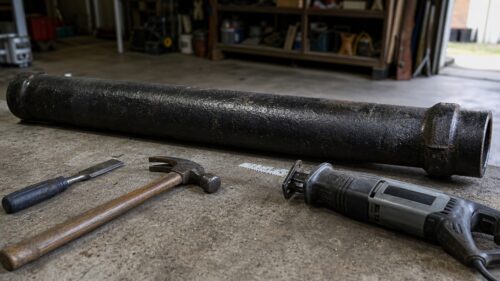
Using the right tools to cut cast iron pipes can improve safety, accuracy, and efficiency. If you want cleaner, more controlled cuts, consider pipe cutters or angle grinders with specialized blades. These tools often produce better results than a reciprocating saw because they handle thick material more precisely. For large or thick pipes, power tools like porta band saws or rotary cutters are safer options. Use a reciprocating saw only if equipped with diamond- or carbide-tipped blades made for cast iron. Always follow manufacturer instructions to prevent dulling or breaking blades, and guarantee proper safety gear is worn during operation.
Final Tips for Choosing the Right Blade and Finishing Your Cut
Choose a reciprocating saw blade rated specifically for cast iron, either carbide-tipped or diamond-edged.
Select a cast iron-specific reciprocating saw blade, such as carbide-tipped or diamond-edged, for best results.
- Select the right Blade for Cutting Cast. Use an 8-10 TPI blade for a perfect balance of speed and durability. Its teeth cut efficiently and last longer.
- Secure the pipe firmly. This prevents movement that could cause blade binding or chipping.
- Cut slowly and evenly. Avoid rushing to reduce the risk of breakage or uneven edges.
- Finish edges with a file or sander. Smooth out burrs for safety and proper fitting.
Inspect and replace the blade regularly for safety.
Frequently Asked Questions
What Is the Best Tool to Cut Cast Iron Pipe?
The best tool to cut cast iron pipe is a reciprocating saw with a carbide-tipped or diamond-grit blade, avoiding inappropriate techniques that risk damage or compromise safety; steady handling guarantees precise, efficient cuts without unnecessary constraints.
How to Cut Cast Iron Pipe With a Reciprocating Saw?
A reciprocating saw, compatible with carbide-grit or diamond blades, effectively cuts cast iron pipes when operated with steady pressure, proper safety gear, and accurate marking, providing a flexible, efficient option for those seeking freedom in plumbing projects.
What Sawzall Blade Will Cut Cast Iron Pipe?
Blade selection is essential for cutting cast iron pipe with a Sawzall, with carbide-tipped or diamond-grit blades offering maximum durability and speed. The best blades feature 8-10 TPI to balance efficiency and longevity.
Can You Cut Cast Iron With a Reciprocating Saw?
Like a skilled swordsman, a reciprocating saw can cut cast iron pipe with the right blade, emphasizing pipe safety. It provides freedom for tight spaces, but steady control guarantees efficient, safe cuts, preventing pipe damage or accidents.
Final Takeaways
When cutting cast iron pipes, select the right blade and follow proper technique. Use steady, moderate speed and gentle pressure to avoid cracks. Support the pipe firmly to reduce vibrations. Check blades regularly for wear and replace when needed. Keep safety gear on and cut slowly. Remember, careful preparation and cautious execution turn a tough task into a safe, effective operation. Follow these steps to guarantee a clean cut and prolonged tool life.

- 6 Best Heavy Duty Jig Saw for 2027 - September 26, 2026
- 8 Best Jigsaw Blades for Acrylic in 2027 - September 26, 2026
- 5 Best Festool Jig Saws for 2027 (Smooth Cuts Every Time) - September 25, 2026