
How long do reciprocating saw blades last? As a homeowner, DIY enthusiast, or professional, understanding the lifespan of your reciprocating saw blades is key to maintaining efficiency and safety during cutting tasks. These blades, whether crafted from carbide, bi-metal, or other durable materials, are critical for cutting through wood, metal, plastic, and more, depending on their design and specifications.
Check your saw blade regularly and look for signs of dullness. These signs include increased effort required to cut, rough or uneven cuts, or visible damage like chipped teeth or corrosion. Proper blade inspection ensures you replace blades before they cause damage or pose safety risks.
Use the saw correctly by avoiding excessive pressure or cutting too fast, as these actions accelerate blade wear. Applying steady, controlled pressure and allowing the blade to do the work extends its useful life.
The blade’s material, such as carbide or bi-metal, significantly influences its longevity. Carbide blades generally last longer than standard high-speed steel options, especially when cutting hard materials. If you notice increased effort, rough cuts, or sparks during operation, it’s an indication that the blade is nearing the end of its lifespan and needs replacing.
Proper maintenance, including cleaning debris from the blade and storing it properly, helps extend its usability.
Understanding blade wear and applying good cutting techniques can maximize the lifespan of your reciprocating saw blades. Neglecting these maintenance steps, however, can shorten their life and compromise safety.
By routinely checking your blades, using the right cutting method, and understanding blade material capabilities, you can ensure optimal performance, safety, and cost-effectiveness in your cutting projects.
How Can You Tell When Your Saw Blade Is Dulling?
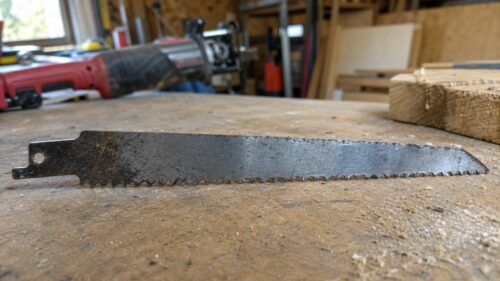
When you notice your saw is not cutting as easily as before, examine the blade for signs of dullness. Check for increased effort needed or a slower cutting speed, which indicates dullness. Look for rougher, splintered cuts, showing the blade is losing sharpness. Notice any more vibration or wobbling during use, which signals wear. If sparks or smoke appear, or the blade emits a burning smell, replace it immediately. Dull blades produce rough cuts, increase vibration, and reduce cutting speed, making work harder. Regularly inspecting these signs guarantees safe, efficient cutting, or else damage to the material or tool may occur.
What Causes Blades to Dull Faster?
If a blade dulls quickly, identify the cause then address it. Dulling occurs from cutting hard materials like hardwoods or metal, increasing wear and reducing blade lifespan. Cutting dry, brittle wood or applying excessive force also speeds up dulling due to friction and heat. Use the right blade for the material and avoid overloading the saw. Additionally, proper blade maintenance can help extend its sharpness and overall lifespan.
How Does Blade Material Impact Its Durability?
Assess the material of your reciprocating saw blade to make certain it matches your cutting task. Choose carbide for maximum wear resistance, ideal for tough, hard materials like metal or masonry. Opt for high-speed steel when needing a balance between durability and affordability, suitable for general cutting jobs. Recognize that blade material influences lifespan; harder materials last longer and resist wear better. Avoid using steel blades on hard materials if longevity is needed. Remember, the right blade material, such as carbide or high-speed steel, determines durability and effectiveness. Bi-metal construction provides a unique combination of flexibility and strength, making it suitable for a wide range of cutting tasks and enhancing blade longevity. Match your blade material to your specific cutting needs for ideal performance and longevity.
Why Does TPI Matter for Blade Wear and Finishing Quality?
Identify the TPI (teeth per inch) of your reciprocating saw blade before starting the cut. Choose the correct TPI because it influences blade wear and finishing quality. Higher TPI produces a smoother finish, but blades wear faster due to more tooth contact. Lower TPI cuts aggressively and quickly but leaves rougher edges. Adjust TPI based on your material and desired outcome. Understanding teeth per inch helps optimize cutting performance and prolong blade life.
How Cutting Pressure and Speed Affect Blade Life?
Applying the correct cutting pressure and maintaining appropriate cutting speed are essential to extending your saw blade’s life. Use moderate pressure so the blade cuts efficiently and heats less, preventing premature dulling. Keep cutting speed steady; too fast increases heat and blade wear, while too slow reduces effectiveness. Proper technique and consistent use help prevent unnecessary stress on the blade, which can lead to early failure. Excessive pressure causes blade teeth to dull faster. High speed can generate heat, speeding up blade degradation. Proper technique reduces heat buildup and blade wear. For high-speed blades, faster cutting may reduce wear if designed for it. Consistent pressure and speed optimize blade lifespan, ensuring smooth, safe cuts. Maintaining blade condition through proper techniques further prolongs its effectiveness.
Does Heat and Cooling During Cutting Help Your Blade Last Longer?
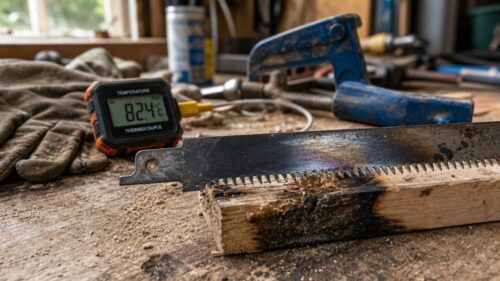
To help your saw blade last longer, keep it cool during cutting. Proper cooling reduces heat buildup, which can warp or weaken the blade and shorten its lifespan. Use lubricants, or water and coolant, to lower the blade’s temperature.
- Apply lubricant before cutting to prevent overheating.
- Use water or coolant for hard materials to stay cool.
- Monitor blade temperature and stop if it heats excessively.
- Choosing the right reciprocating saw blades for metal greatly enhances durability and efficiency.
Avoid neglecting heat; overheating causes warping, dulling, and early failure. Keep the blade at a safe temperature to maintain sharpness and prevent premature wear. Proper cooling ensures efficient cuts and longer blade life.
What Signs Indicate It’s Time to Replace Your Blade?
When signs of wear appear on a saw blade, it is time to replace it. Look for blade wear such as chipped, cracked, or broken teeth, as these damage signs weaken the blade and reduce cutting efficiency. If the blade becomes dull, slow cutting or requires more effort, it’s a clear indicator for blade replacement. Increased vibration or rough, jagged cuts signal the blade is compromised. When teeth are worn down or the edges are no longer sharp, efficiency drops. Never ignore deformation, bending, or visible damage. Replace the blade immediately, or else risk injury or poor results. Regularly inspecting your reciprocating saw blades helps ensure optimal performance and safety.
How Can You Extend the Lifespan of Your Saw Blades?
Make sure to clean your saw blades regularly to reduce wear from dirt, debris, and resin buildup. Proper blade maintenance extends blade life by preventing clogging and friction. Apply a lubricant before cutting to reduce heat buildup, which helps blades last longer. Use cutting techniques that avoid excessive force and overheating, or else blades dull prematurely. To maximize durability, select blades made for the specific material being cut.
- Keep blades sharp with proper sharpening or replacing when needed
- Store blades in a dry, protected place, avoiding bending or damage
- Use the correct blade for each task to prevent early wear
Quick Tips for Better Blade Maintenance and Longer Use
Maintaining your saw blades properly can considerably extend their blade lifespan and improve cutting performance. To enhance blade maintenance, always keep blades cooled with lubricant before cutting, reducing heat that dulls blades fast. Use the right blade material, such as carbide or tungsten, for different materials to prevent premature dulling. Straighten bent blades carefully by pounding them gently on a wood block, maintaining cutting efficiency. Store blades in a dry, protected place to prevent damage. Employ proper cutting techniques, avoiding excessive force and high speeds, or else blades will wear out quickly. Proper tool care guarantees longer blade use and smoother, safer cuts.
Frequently Asked Questions
What Is the Longest Blade Available for a Reciprocating Saw?
The longest reciprocating saw blades can reach 16 inches, typically made of durable materials like bi-metal, offering increased cutting speed and reach. Proper maintenance tips prolong blade durability and maintain ideal performance despite their extended length.
Which Brand of Reciprocating Saw Blades Is Best?
In the pursuit of cutting freedom, EZARC blades stand out with durable carbide tips, ensuring extreme longevity; Bosch and Milwaukee excel in cutting speed and compatibility, empowering users to wield their tools without limits, carving through materials seamlessly.
Do All Reciprocating Saw Blades Fit All Reciprocating Saws?
Reciprocating saw blades do not fit all models due to compatibility concerns, blade material, and installation requirements, emphasizing the importance of verifying manufacturer’s specifications for safety precautions, proper fit, and peak performance across different saw types.
How Often Should I Replace Saw Blades?
In the quest for freedom, blade material and cutting speed guide when replacements are needed; typically, blades warrant refreshment after 1-2 hours of demanding tasks, ensuring peak performance and a smooth, unhindered cutting experience.
Final Takeaways
To maximize your blade’s lifespan, inspect it regularly and replace when needed. Follow proper cutting techniques and avoid forcing the saw. Keep blades clean and cool to prevent heat damage. Use the correct blade type for each material and avoid cutting at excessive speeds. By maintaining and monitoring your blades, you guarantee safer, smoother cuts. Remember, a well-kept blade performs better and lasts longer, so prioritize maintenance to achieve the best results.

- 6 Best Heavy Duty Jig Saw for 2027 - September 26, 2026
- 8 Best Jigsaw Blades for Acrylic in 2027 - September 26, 2026
- 5 Best Festool Jig Saws for 2027 (Smooth Cuts Every Time) - September 25, 2026