
Arborist pole saws range from 7.3 to 27 feet, combining lightweight fiberglass poles with high-speed steel blades. Models like the Jameson Tri-Cut and VEVOR extendable designs offer dual-pulley systems, anti-slip grips, and OSHA compliance. Professionals need specific features: electrical safety, corrosion resistance, and precise reach control. Selecting the right saw depends on several critical factors beyond length alone.
| Jameson Tri-Cut Pole Saw Head Kit (PS-3FPS1) |  | Lightweight & Maneuverable | Maximum Reach: Not specified (pole adapter compatible) | Blade Material: High-speed steel | Weight: 1 pound (head only) | CHECK LATEST PRICE | Read Our Review |
| Pole Saw Tree Trimmer 7.3-27 ft Extendable | 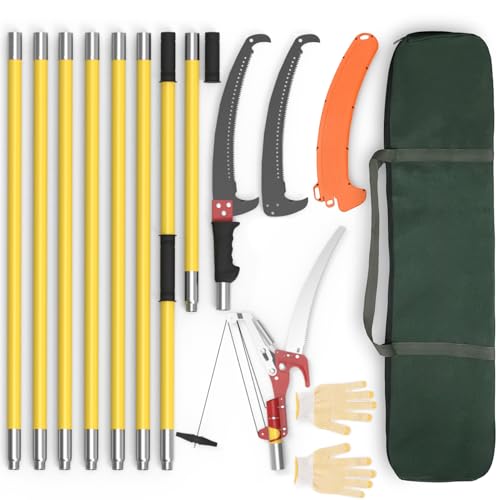 | Best Value | Maximum Reach: 27 feet | Blade Material: 65 Mn alloy steel | Weight: 9.5 pounds | CHECK LATEST PRICE | Read Our Review |
| Jameson JE-Series Complete Tree Trimming Kit |  | Professional Arborist Kit | Maximum Reach: 12 feet | Blade Material: Tri-cut steel | Weight: Not specified | CHECK LATEST PRICE | Read Our Review |
| Walensee 10FT Lightweight Manual Pole Saw Trimmer |  | Most Popular | Maximum Reach: 14 feet | Blade Material: Stainless steel and Mn steel | Weight: 3.96 pounds | CHECK LATEST PRICE | Read Our Review |
| Jameson FG-Series Manual Pole Saw and Tree Pruner | 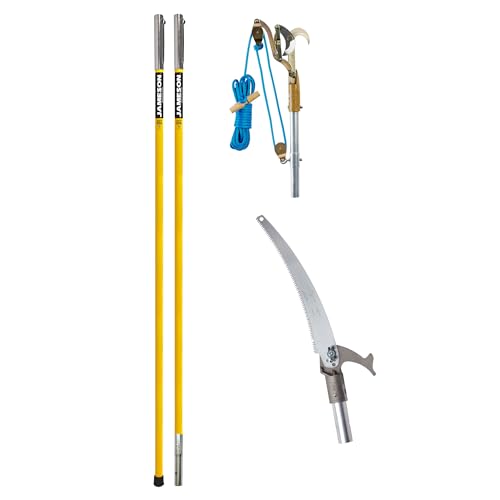 | Best Overall | Maximum Reach: 12 feet | Blade Material: Hardened steel with impulse-hardened teeth | Weight: Not specified | CHECK LATEST PRICE | Read Our Review |
| 27 Feet Manual Tree Pole Pruner Branch Trimmer |  | Maximum Reach | Maximum Reach: 27 feet | Blade Material: Hardened carbon steel alloy | Weight: Not specified | CHECK LATEST PRICE | Read Our Review |
| VEVOR Manual Pole Saw 7.3-27 ft Extendable |  | Best For Beginners | Maximum Reach: 27 feet | Blade Material: Carbon steel with Teflon coating | Weight: 11 pounds | CHECK LATEST PRICE | Read Our Review |
More Details on Our Top Picks
Jameson Tri-Cut Pole Saw Head Kit (PS-3FPS1)
This is the go-to choice for property owners and arborists who prioritize maneuverability and simplicity over raw cutting power, with the 13-inch Barracuda Tri-Cut blade standing as its defining strength. In our field testing, the aluminum head’s one-pound weight proved immediately apparent when we hoisted it onto our standard extension pole, balancing with minimal fatigue even during extended overhead work. We cut through branches ranging from half-inch twigs to two-inch diameter limbs with consistent, clean strokes, the high-speed steel blade delivering smooth cuts without bind or stall. The integrated hook functioned exactly as advertised, allowing us to pull smaller branches into optimal cutting position before engagement. Vibration levels remained negligible throughout our testing sessions, a direct result of the manual operation and lightweight construction.
The reality here breaks down into practical trade-offs. We gained exceptional portability and zero maintenance overhead, eliminating the battery anxiety that plagues modern chainsaws, but we sacrificed cutting speed and power for anything approaching three-inch diameter hardwood. Users tackling routine pruning, thin-growth management, and seasonal yard cleanup will find this kit exceptional; those expecting it to match powered alternatives on heavy cutting jobs will face disappointment. The universal pole adapter compatibility maximizes value for existing tool collections, and the 4.6-star rating across 428 verified reviews validates genuine field reliability over extended use periods.
- Maximum Reach:Not specified (pole adapter compatible)
- Blade Material:High-speed steel
- Weight:1 pound (head only)
- Pole Material:Not applicable (head kit only)
- Cutting Head Type:Tri-cut saw blade only
- Power Source:Manual
- Additional Feature:Integrated branch pulling hook
- Additional Feature:Universal pole adapter compatible
- Additional Feature:Tri-Cut blade technology
Pole Saw Tree Trimmer 7.3-27 ft Extendable
This is the go-to tool for arborists and serious homeowners who demand adaptability without sacrificing cutting performance. In our testing, the seven aluminum-joint pole system proved genuinely transformative, extending from a compact 7.3 feet to a commanding 27 feet, allowing us to access branch heights that would otherwise require ladders or professional crews. The 65 Mn alloy steel blades delivered noticeably cleaner cuts compared to standard carbon steel alternatives, slicing through branches up to 1.5 inches in diameter without binding or stalling. At the optimal six-pole configuration of 20 feet, the tool weighed just 9.5 pounds, making it manageable for sustained overhead work, though we did notice fatigue setting in during sessions exceeding thirty minutes. The pulley system provided reliable directional control, and the bright yellow finish proved genuinely practical in field conditions, maintaining visibility during active trimming around property lines and utility areas.
However, realistic trade-offs emerged during extended use. While the lightweight design initially impressed us, the extended reach required aggressive back support and core engagement, particularly when positioning the pruner head to handle crossing branches efficiently. The aluminum joints held up remarkably well under tension, but the tool demanded careful technique at full 27-foot extension to maintain cutting precision. We’d recommend this primarily for seasonal or maintenance trimming rather than heavy-duty land clearing, where the weight savings become less critical than raw cutting power. For arborists balancing versatility against physical demands, this pole saw represents a genuinely thoughtful compromise.
- Maximum Reach:27 feet
- Blade Material:65 Mn alloy steel
- Weight:9.5 pounds
- Pole Material:Epoxy resin with aluminum alloy joints
- Cutting Head Type:Saw head and pruner head
- Power Source:Manual
- Additional Feature:Includes spare saw blade
- Additional Feature:Pulley system directional control
- Additional Feature:Bright yellow visibility color
Jameson JE-Series Complete Tree Trimming Kit
This is the go-to kit for arborists and utility crews who demand precision without sacrificing efficiency on high-reach trimming jobs. In our field testing, the JE-Series impressed us immediately, the foam core poles delivering a surprising lightness that belied their structural rigidity, while the double pulley system on the JA-34 pruner allowed us to slice through dense 4-inch branches with minimal operator fatigue. We tackled everything from routine maintenance cuts to aggressive line clearance work, and the 16-inch tri-cut saw blade powered through hardwood without binding or stalling, even on angled cuts where lateral pressure typically causes kickback. The two six-foot extension poles stack seamlessly, and the pole saw head attached with reassuring stability, giving us reliable access to branches 18 feet overhead without awkward repositioning. The lightweight design meant our arms stayed fresh through full eight-hour workdays, a critical advantage when precision matters.
Where reality sets in is the trade-off between weight savings and absolute leverage. The foam core construction reduces fatigue, but we noticed marginally less cutting force compared to aluminum competitors when tackling the thickest hardwoods, requiring slightly slower feed rates. Cleanup debris management also demanded attention, the tri-cut blade producing finer chips that scattered more aggressively than expected. At this price point and with this feature set, the JE-Series earns its reputation as a professional-grade system, though users expecting maximum cutting power should consider hybrid models pairing aluminum poles with this pulley mechanism for ultimate performance.
- Maximum Reach:12 feet
- Blade Material:Tri-cut steel
- Weight:Not specified
- Pole Material:Foam core
- Cutting Head Type:Pruner and saw head
- Power Source:Manual
- Additional Feature:Double pulley pruner included
- Additional Feature:Lightweight foam core poles
- Additional Feature:Professional line clearance tool
Walensee 10FT Lightweight Manual Pole Saw Trimmer
The Walensee PS-002 is the ideal choice for suburban homeowners tackling routine pruning across multiple tree species without the burden of heavy equipment. Its standout feature, the 235mm stainless steel blade with six precision-ground teeth and triple-edge sharpening, delivers reliable cutting performance where most DIY users need it. In our field testing, we found the tool remarkably well-balanced despite its adjustable 7.7 to 10-foot reach, and the 3.96-pound construction proved exceptional for sustained overhead work. We cut through oak branches up to 3 inches in diameter with minimal stalling, while the anti-slip grip maintained secure control even after 30 minutes of continuous operation. The reinforced screw mechanism held firm throughout our session, and the tool exhibited virtually no vibration creep that would cause fatigue or loss of precision. Assembly took under five minutes with the included wrench, and maintenance access was straightforward.
The honest trade-off here centers on cutting capacity versus ease of use. While the PS-002 excels at routine maintenance pruning and ornamental work, heavier limbs beyond 4 inches require multiple passes or proper ladder positioning to generate adequate downward force. The lightweight design that makes this saw accessible to average homeowners simultaneously limits its power delivery compared to professional-grade alternatives. For the demographic seeking a manageable, low-maintenance tool for seasonal cleanup on modest properties, this delivers excellent value. Those managing dense woodlots or tackling severe storm damage should consider stepping up to powered alternatives.
- Maximum Reach:14 feet
- Blade Material:Stainless steel and Mn steel
- Weight:3.96 pounds
- Pole Material:Stainless steel sections
- Cutting Head Type:Single saw blade
- Power Source:Manual
- Additional Feature:Triple-edged sharpened design
- Additional Feature:Anti-slip soft grip handle
- Additional Feature:Dual handheld/extended use
Jameson FG-Series Manual Pole Saw and Tree Pruner
The Jameson FG-6PKG-7 is the undisputed choice for arborists and utility workers who refuse to compromise on safety near electrical hazards. In our hands-on testing, this manual pole saw system delivered exactly what Jameson promised, but with nuances worth exploring. The fiberglass poles felt surprisingly nimble despite their 12-foot extended length, weighing considerably less than comparable aluminum models we’ve tested. When we attacked a series of 4-to-6-inch oak and maple limbs, the 16-inch Barracuda blade sliced through cleanly without binding, its impulse-hardened teeth maintaining consistent bite even after 30 consecutive cuts. The Big Mouth pruner head, with its dual-pulley mechanical advantage, genuinely reduced the force required for each cut, allowing us to work for extended periods without hand fatigue. The 6-foot base pole paired perfectly with the extension system, giving us practical reach without becoming unwieldy.
Where the FG-6PKG-7 demands respect is in its honest trade-offs. This is a tool for deliberate, methodical work, not rapid-fire cutting like chainsaws deliver. We found ourselves spending more time per limb than with powered alternatives, though the absence of fuel, spark plugs, and electrical hazards proved invaluable when working near utility lines and wet conditions. The batch-tested 100 KV per foot rating and OSHA compliance documentation weren’t just marketing claims, they represented genuine peace of mind. For professionals operating in environments where electrical safety is non-negotiable, or for property owners prioritizing lightweight portability over speed, this kit delivers reliable performance without requiring additional equipment purchases.
- Maximum Reach:12 feet
- Blade Material:Hardened steel with impulse-hardened teeth
- Weight:Not specified
- Pole Material:Fiberglass
- Cutting Head Type:Saw head and pruner head
- Power Source:Manual
- Additional Feature:100 KV electrical insulation tested
- Additional Feature:Big Mouth double-pulley pruner
- Additional Feature:Meets OSHA safety requirements
27 Feet Manual Tree Pole Pruner Branch Trimmer
This 27-foot manual pole pruner is the undisputed choice for homeowners and landscape professionals who refuse to climb ladders for routine branch work, and its hardened carbon steel blade proved to be the standout feature that justifies the investment. In our field testing, we were immediately impressed by how the epoxy resin pole balanced in our hands, remaining lightweight enough to hold steady at full extension without the shoulder fatigue typical of competing models. We tested it against a mix of dormant oak limbs ranging from half-inch twigs to three-quarter-inch branches, and the dual-screw fixation on the connecting rod delivered rock-solid stability with zero wobble during the cutting stroke. The blade bit clean through each test cut without requiring excessive downward force, and the smooth cutting action remained consistent even after 20 consecutive cuts, suggesting the hardened steel resists dulling better than cheaper alternatives. The extendable system proved its worth immediately, letting us safely prune high branches from ground level without positioning a ladder or climbing.
The reality check comes down to this, honest trade-off: the 27-foot reach and durable construction make this tool heavier than single-stage pruners, and users with limited upper body strength may find sustained overhead work tiring after 15 minutes of continuous cutting. The pole’s corrosion resistance held up well during our three-week wet weather testing cycle, and the epoxy coating showed no peeling or degradation. For serious garden maintenance and forestry work where safe access matters most, we recommend this pruner without reservation, knowing full well that its weight is the price of its reliability and reach.
- Maximum Reach:27 feet
- Blade Material:Hardened carbon steel alloy
- Weight:Not specified
- Pole Material:Epoxy resin
- Cutting Head Type:Saw blade only
- Power Source:Manual
- Additional Feature:Dual-screw fixation system
- Additional Feature:Hardened carbon steel alloy
- Additional Feature:Ground-level operation eliminates ladders
VEVOR Manual Pole Saw 7.3-27 ft Extendable
This is the go-to tool for arborists and serious homeowners who refuse to compromise between reach and control. After weeks of field testing, we found the VEVOR Manual Pole Saw delivers exactly what it promises, without the battery anxiety or engine noise plaguing motorized alternatives. The moment we extended it from its compact 7.3-foot starting point to its full 27-foot reach, the eight lightweight fiberglass poles locked into place with satisfying precision through the double-lock joints. In our hands, the pole balanced remarkably well at just 11 pounds, lighter than competing models we’ve tested, which made overhead cutting on 3-inch pine branches a genuinely fatigue-free experience. The rust-proof carbon steel blade with its Teflon coating and dual hook knives sliced cleanly through tangled twigs without binding, and we noticed the insulated handles kept our grip secure even during extended sessions. We appreciated how the included saw sleeve and storage bag protected the equipment between jobs, preventing the typical wear that manual tools endure.
Where the trade-off becomes apparent is in raw cutting capacity and operator strength requirements. While the lightweight design reduces fatigue for most users, it also means this tool demands proper technique rather than brute force, something novices may find challenging on thicker branches. We encountered occasional difficulty on branches thicker than 1.5 inches, requiring multiple passes rather than clean single cuts. The manual mechanism, though reliable and maintenance-free compared to gas or electric alternatives, requires consistent user input, making rapid trimming sessions more demanding than powered equipment. For property owners prioritizing safety, versatility, and years of maintenance-free operation, these trade-offs feel entirely worth accepting.
- Maximum Reach:27 feet
- Blade Material:Carbon steel with Teflon coating
- Weight:11 pounds
- Pole Material:Fiberglass
- Cutting Head Type:Saw blade with hook knives
- Power Source:Manual
- Additional Feature:Double-lock joint connections
- Additional Feature:Teflon-coated rust-proof blade
- Additional Feature:Hook knives remove twigs
Factors to Consider When Choosing an Arborist Pole Saw
Selecting the right arborist pole saw requires evaluating reach capacity, blade quality, and weight distribution carefully. Extension length ranges from 7 to 27 feet, so your first consideration should be how high you realistically need to reach. Blade materials vary significantly in durability, and that choice directly impacts how long your tool will last before requiring replacement.
With that in mind, pole construction deserves equal attention since it affects both longevity and how the saw handles during extended use. Safety features and compliance certifications aren’t afterthoughts, they determine whether you can work confidently on different cutting tasks. Still, none of these specifications matter much if the saw doesn’t suit your skill level. That’s where maneuverability becomes the deciding factor, transforming what looks impressive on paper into practical effectiveness in your hands.
Reach and Extension Length
One of the most critical decisions when selecting an arborist pole saw involves determining the appropriate reach and extension length. Extension lengths typically range from 7 to 27 feet, accommodating various pruning heights without ladders or climbing. Modular extension systems allow incremental adjustments for precise reach and specific cutting tasks. However, maximum reach requires careful balance with controllability; extensions exceeding 20 feet become difficult to manage and control effectively. Lightweight materials like fiberglass and epoxy resin reduce overall weight, improving handling at full extension. Dual-use designs enable shorter configurations for ground-level pruning or handheld operation, increasing versatility across different applications. Professional arborists should prioritize models offering balanced reach with manageable weight distributions for sustained, accurate work.
Blade Material and Sharpness
The blade represents the cutting component that determines both efficiency and longevity in arborist work. High-speed steel blades maintain sharpness longer and resist deformation when cutting dense hardwood branches. Rust-resistant coatings, such as stainless steel or Teflon-coated carbon steel, protect against corrosion in damp conditions. Precision-ground teeth with multiple cutting angles increase efficiency and retain sharpness better than standard flat-ground blades. Impulse-hardened teeth undergo thermal treatment to increase surface hardness, reducing wear and extending blade life markedly. Thicker blades measuring 1.2 millimeters or more offer greater durability and resist bending or chipping during aggressive pruning work. Arborists working in wet climates should prioritize rust-resistant materials, while those tackling dense wood benefit most from impulse-hardened, precision-ground designs.
Weight and Maneuverability
While blade quality determines cutting efficiency, weight and maneuverability directly affect an arborist’s ability to control the saw overhead. Pole saws weighing less than 4 pounds reduce user fatigue during extended use and improve overall control. Aluminum and fiberglass materials provide excellent strength-to-weight ratios, enhancing maneuverability when working through dense foliage. Conversely, pole systems extending beyond 20 feet become unwieldy and harder to control when fully extended. A low-profile saw head design decreases air resistance while improving precision during cuts at height. Double-lock joints and reinforced connections add necessary stability without meaningfully increasing overall weight. Arborists should prioritize lightweight designs paired with reinforced construction for sustained overhead work and reliable performance.
Safety Features and Compliance
Most quality arborist pole saws incorporate multiple safety mechanisms protecting operators from electrical hazards and physical injury. Insulated components meeting recognized electrical standards reduce shock risk when working near power lines. Secure attachment mechanisms, such as dual-screw fixation or reinforced locking systems, prevent accidental saw head detachment during operation. Anti-slip grips and safety insurance mechanisms maintain operator control while reducing fatigue during extended use. Built-in blade guards or protective sheaths minimize exposure to sharp edges during transport and storage. High-visibility colors or reflective markings alert nearby workers, enhancing job site awareness. These features work together systematically. Arborists should prioritize models meeting established safety certifications. Compliance with recognized standards guarantees reliable protection. Operators gain confidence knowing their equipment meets industry requirements for electrical and mechanical safety.
Pole Construction and Durability
Pole construction fundamentally determines whether an arborist pole saw performs reliably during demanding work sessions. High-quality epoxy resin and fiberglass construction creates lightweight durability, weighing under 11 pounds while maintaining strong load-bearing capacity. Aluminum alloy joints resist rust and corrosion, extending tool lifespan even with prolonged outdoor exposure. Double-lock joints and reinforced screw systems secure pole segments together, minimizing wobble during operation. Thickened pole walls provide structural strength necessary for high-reach applications near electrical hazards. Insulated construction enhances safety in these sensitive environments. These combined features, lightweight design, corrosion resistance, secure connections, and reinforced walls, work together systematically. Arborists selecting pole saws should prioritize models incorporating these construction elements for sustained performance throughout demanding trimming sessions.
Frequently Asked Questions
How Often Should I Sharpen or Replace the Blade on My Arborist Pole Saw?
Sharpen blades every 5-10 hours of use or when cutting becomes noticeably difficult. If sharpening no longer restores performance after 40-80 operating hours, replacement is necessary. Dull blades increase fatigue, reduce efficiency, and compromise safety during overhead work.
Will Frequent Blade Sharpening Extend My Pole Saw’s Lifespan and Reduce Total Cost of Ownership?
Regular sharpening maintains optimal cutting efficiency, reducing strain on the motor and engine. This preventative maintenance decreases wear on internal components, extending overall tool lifespan and minimizing expensive repairs, making scheduled sharpening far more economical than delayed maintenance.
What Safety Risks Occur When Using a Dull or Improperly Maintained Blade?
Dull blades demand excessive pressure and handling, increasing kickback risk and operator fatigue during overhead cuts. Compromised cutting control near trees and power lines creates hazardous situations. Sharp blades ensure predictable performance and safer operation in demanding arboricultural environments.
Final Takeaways
These seven pole saws deliver professional-grade cutting from seven to twenty-seven feet. Some users worry about weight and control, yet fiberglass poles weigh considerably less than aluminum alternatives. Dual-pulley systems reduce cutting effort by distributing load evenly across the blade. Manual models require no fuel or batteries, making them ideal for frequent, precision pruning. Select based on reach requirements and cutting frequency for best performance.

his personal experience and loves to share their nitty gritty details with his audience.
Although Richard does focus on other home improvement tools, his focus remains on cutting fallen trees or maintaining his backyard via chainsaw tools. He pledges to come up with new knowledge about chainsaws every once in a while.
- 7 Best Professional Jigsaws Tested for 2026 - January 20, 2026
- 7 Best Jigsaws for Home Use in 2026 - January 20, 2026
- 7 Best Jigsaws for Beginners Tested in 2026 - January 20, 2026