
If you’ve ever felt like your jigsaw is drifting off the line when you cut curves, it’s usually because you’re using the wrong jigsaw blades for curves.
From my own bench time, the blade choice is what determines whether you get fine steering, low splintering, and a snug cut, or whether you spend the whole session chasing your layout and still end up with fuzz.
We’ve found that with the right T-shank set, you can stay on your line instead of fighting the kerf.
Before we get into our seven favorites, like T101AO, T142HB, and the reverse-cut laminate picks, pause and ask yourself what you’re cutting, wood, plastic, or metal, and how tight that radius is.
That one detail usually decides which blade geometry and tooth setup will behave best for your cut.
| Jigsaw Blades T Shank 20PCS T101AO with Storage Case |  | Best Value Curves | T-Shank compatibility: T-shank | Wood cutting focus: Curved fine cuts in wood | Curved/scrolling use: Curved & scrolling fine finish cuts | VIEW LATEST PRICE | Read Our Analysis |
| Festool 204267 Jigsaw Blade S 75/1,4 K/5 for Curve Cuts in Wood 5-Pack |  | Professional Curve Cuts | T-Shank compatibility: T-shank | Wood cutting focus: Curve cuts in wood | Curved/scrolling use: Curve cuts, tight radii | VIEW LATEST PRICE | Read Our Analysis |
| T142HB T-Shank Jigsaw Blades for Wood (6-Pack) | 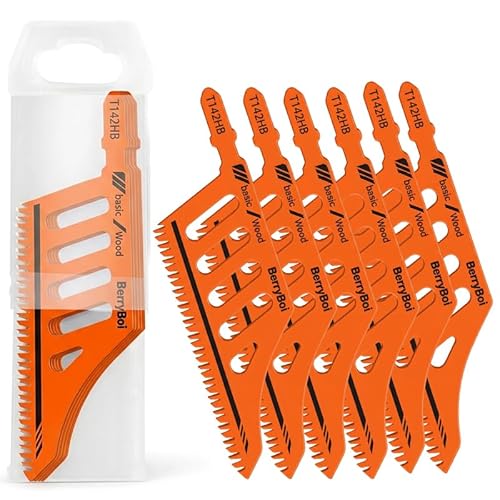 | Precision Flush Trimming | T-Shank compatibility: T-shank | Wood cutting focus: Wood cutting (including curves/tight spaces) | Curved/scrolling use: Curve cutting + corner/tight-space detail | VIEW LATEST PRICE | Read Our Analysis |
| Jigsaw Blades T-Shank Set for Wood and Plastic |  | Smooth Splinter-Free | T-Shank compatibility: T-shank | Wood cutting focus: Wood curved scrolling/fine cuts | Curved/scrolling use: Curved scrolling | VIEW LATEST PRICE | Read Our Analysis |
| Bosch T101AO 5 pc. 3-1/4 in. 20 TPI Clean for Wood T-Shank Jig Saw Blades |  | Top Clean Wood Scroll | T-Shank compatibility: T-shank | Wood cutting focus: Clean scrolling cuts in wood | Curved/scrolling use: Clean curved/scolling cuts | VIEW LATEST PRICE | Read Our Analysis |
| Special Wood T142HB Jigsaw Blades 5 Pack | 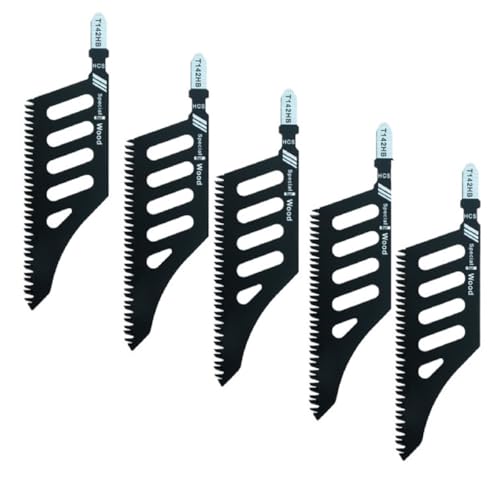 | Best Tight-Radius Control | T-Shank compatibility: Universal T-shank | Wood cutting focus: Wood straight + curved cuts | Curved/scrolling use: Supports straight + curved cuts | VIEW LATEST PRICE | Read Our Analysis |
| 20 Piece T-Shank Jigsaw Blades Set for Wood Plastic and Metal Cutting |  | All-Round T-Shank Kit | T-Shank compatibility: Standard T-shank | Wood cutting focus: Clean wood cuts (scroll/tight curves) | Curved/scrolling use: Scroll blade control for tight curves | VIEW LATEST PRICE | Read Our Analysis |
More Details on Our Top Picks
Jigsaw Blades T Shank 20PCS T101AO with Storage Case
If you’re after a tidy set of jigsaw blades that deliver clean, fine scrolling cuts, the GINEPAN T101AO 20-piece T-shank set does exactly that for the day-to-day materials people actually cut. In use, the teeth engage consistently, helping you stay on track when you’re working on double-sided laminates, MDF, and both hard and soft woods. It’s also a practical choice for plywood when you want a smoother line without fighting the cut.
What stands out most is how the pointed tooth geometry helps reduce splintering, which is a big deal when you’re cutting sheet goods where tear-out can ruin a finished edge. With careful feed control, these blades cut on both sides effectively enough to keep the work looking presentable, even when the grain or laminate layers start to resist. For anyone doing fretwork-style shapes, curve-friendly layout cuts, or interior trimming where precision matters, that cleaner cut behavior is the value.
The set is also easy to live with because it comes in a storage case, which helps keep blade sizes together and reduces the usual rummaging when you’re mid-project. That said, the case is designed with small blades in mind, but the fit can be a bit generous, so blades can shift around if the case gets tossed into a bag. Treat it like storage, not a travel container, and you’ll avoid the hassle.
- T-Shank compatibility:T-shank
- Wood cutting focus:Curved fine cuts in wood
- Curved/scrolling use:Curved & scrolling fine finish cuts
- Tooth count (TPI/teeth rating):20 TPI
- Steel blade material:High carbon steel
- Clean/minimized splintering goal:Reduces splintering both sides
- Additional Feature:Storage case included
- Additional Feature:Storage case gap large
- Additional Feature:Easy blade scattering
Festool 204267 Jigsaw Blade S 75/1,4 K/5 for Curve Cuts in Wood 5-Pack
If you’re looking for clean, professional curve cuts in wood, the Festool 204267 S 75/1,4 K/5 blade set is designed to make tight radius work more manageable. The narrow blade profile helps you stay on line, and the conically ground teeth cut in a way that’s well suited to intricate scrollwork and detailed shaping where a wider blade would tend to wander.
In day-to-day use, these blades feel practical for controlling the cut, especially when you’re working with a Festool jigsaw setup where curve accuracy matters. They’re made for frequent switching and reliable running in a typical shop workflow, so you can keep moving through cut lists without having to fight for consistent kerf behavior.
What really stands out is how well the blade approach supports fine radius curves rather than forcing the saw to “adapt.” When you take a steady pace and let the blade do the work, you get smoother results and less frustration than with blades that are better at straight cuts or gentler bends.
That said, like any curve-focused jigsaw blade, it’s not meant for rushing. If you force feed rates or push too aggressively through tougher sections of wood, you may feel it in how the cut tracks, so a controlled hand and patience are still part of getting the best finish.
- T-Shank compatibility:T-shank
- Wood cutting focus:Curve cuts in wood
- Curved/scrolling use:Curve cuts, tight radii
- Tooth count (TPI/teeth rating):18 TPI
- Steel blade material:HCS tool steel
- Clean/minimized splintering goal:Clean curve cuts
- Additional Feature:Extremely tight radii
- Additional Feature:Narrow blade profile
- Additional Feature:Made in Germany
T142HB T-Shank Jigsaw Blades for Wood (6-Pack)
BerryBoi’s T142HB T-shank jigsaw blades (6-pack) are a solid pick if your goal is precision flush trimming in real workshop work. They’re especially useful on wood-based panels and along board edges where you need clean contact and controlled curve cutting, including tight-space detail that doesn’t leave you time for guesswork. The blade’s black-coated HCS construction helps the cut feel smoother and more consistent during high-speed passes, which can reduce binding and help you stay on your line instead of fighting the tool.
In day-to-day use, the biggest practical win is how well these blades respond to setup and technique. When the universal T-shank connection is locked down properly, you get that firmer feel that translates into more accurate tracking, which matters when trimming flush to a surface or shaping close quarters. If you leave the fit loose or rush the initial alignment, you’ll feel it quickly in the cut quality, so careful insertion and secure clamping make a noticeable difference.
Another strength is usability across common cordless and corded jigsaw platforms. These blades are built for quick blade swaps and can be used with Bosch, DEWALT, Makita, Milwaukee, and Ryobi jigsaws, which is convenient when you’re switching between projects, edge work, or different materials at the bench. They’re well-suited to wood, plastic, and fiberboard tasks where you want dependable results without making blade changes a slowdown.
Where they can fall short is mostly about technique expectations. If your workflow is all about speed before setup, the “clean cut first” advantage won’t fully show, because flush and detail trimming demands stable placement and careful feed. For best outcomes, treat them like a precision accessory for trimming corners and edges, and give yourself a moment to secure the blade before you start pushing the jigsaw hard.
- T-Shank compatibility:T-shank
- Wood cutting focus:Wood cutting (including curves/tight spaces)
- Curved/scrolling use:Curve cutting + corner/tight-space detail
- Tooth count (TPI/teeth rating):(not specified)
- Steel blade material:High carbon steel (HCS)
- Clean/minimized splintering goal:Cleaner flush cuts
- Additional Feature:Black coated surface
- Additional Feature:Improved flush cuts
- Additional Feature:Quick blade change locking
Jigsaw Blades T-Shank Set for Wood and Plastic
Qulkws’ 20-piece T-shank jigsaw blade set is built for smoother, splinter-free scrolling cuts when you’re working in wood and plastic. In real use, that matters most on curved patterns, where standard blades can leave ragged edges that chew up your time with sanding. These blades aim to deliver clean, fine cutting so your cut lines stay crisp and usable for projects like decorative scrollwork, jigsaw inlays, and tidy craft edges.
The standout strength is how the blades behave on softwood and hardwood shapes that demand control. They’re also a practical option for cutting chipboard and fiber boards, where you still want a consistent edge without excessive chipping. For plastics, they hold up well for basic cut jobs, making the set a convenient “one blade type per task” choice for makers who switch materials frequently.
Usability is solid thanks to the T-shank, universal fit that plugs into most jigsaws without fuss. The set also comes in a neat kit that makes it easy to keep blades organized and find the right one when you’re mid-project. Still, the biggest practical takeaway is technique, feed too aggressively and you’ll fight the cut. A slower, steady pace lets the teeth do the work and helps maintain the cleaner result the blades are known for.
Where this set may fall short is for users who expect to plow through thick material or rush complex curves. If you treat the jigsaw like it can handle everything at full speed, you may end up with rougher edges and more cleanup than you wanted. For best results, clamp your work properly, protect your hands, and let the blade speed match the material and curve complexity.
- T-Shank compatibility:T-shank
- Wood cutting focus:Wood curved scrolling/fine cuts
- Curved/scrolling use:Curved scrolling
- Tooth count (TPI/teeth rating):20 TPI
- Steel blade material:Alloy steel
- Clean/minimized splintering goal:Clean, splinter-free cuts
- Additional Feature:Clean splinter-free finish
- Additional Feature:8.2 cm blade length
- Additional Feature:Curved scrolling fine finish
Bosch T101AO 5 pc. 3-1/4 in. 20 TPI Clean for Wood T-Shank Jig Saw Blades
The Bosch T101AO 5‑pc set nails blades deliver clean, controlled cuts in wood applications where splintering is the real enemy, especially along scroll-cut curves and tight interior lines. I found the 20 TPI tooth pattern helpful for working slowly through grain without shredding fibers, so the top and bottom faces stay noticeably cleaner than with more aggressive blades. For anyone doing decorative fretwork, jigsaws on furniture parts, or careful cutouts in plywood or MDF, they’re a solid choice when you care about edge quality.
Usability is straightforward once the blade is installed, and the T‑shank design plays nicely with common jig saw setups. You also get the benefit of having multiple blades on hand, which matters because wood cutting can chew through edges quickly when you’re doing a lot of runs or switching between materials. In practice, that convenience means less downtime and more time shaping and fitting parts.
Where these blades really shine is in control. The narrow, longer reach helps you follow layout lines with less wandering, which is especially useful when your project demands smooth turning and consistent radii. Curves feel more manageable because the blade engages the wood cleanly rather than grabbing and tearing, but you still need to let the cut do the work.
The main limitation is that blade behavior depends heavily on your setup and feed rate. If you push too hard or let blade tension get sloppy, any fine-tooth blade will start to produce more roughness and tear-out than you want. For best results, keep the saw moving steadily, maintain solid tension, and avoid forcing the blade around corners, because rushing is what turns a clean scroll cut into a splinter challenge.
- T-Shank compatibility:T-shank
- Wood cutting focus:Clean scrolling cuts in wood
- Curved/scrolling use:Clean curved/scolling cuts
- Tooth count (TPI/teeth rating):20 TPI
- Steel blade material:High carbon steel
- Clean/minimized splintering goal:Splinter-free cuts on both sides
- Additional Feature:Set-screw mounting hole removed
- Additional Feature:Narrow blade body
- Additional Feature:Pointed tooth reduces splintering
Special Wood T142HB Jigsaw Blades 5 Pack
If you’re looking for Special Wood T142HB jigsaw blades in a 5-pack, the immediate value is how reliably they help you follow tight curves in wood. In real use, the T-shank style is what makes a noticeable difference, because it tends to stay stable as you cut instead of feeling vague or wobbly against your cut line. They’re especially handy when you’re doing scrolling, coping, or pattern work where you can’t afford to lose accuracy mid-rip.
Usability is strong in the everyday sense. The blades swap quickly and lock in firmly on most standard jigsaws, which matters when you’re stopping often to check a layout or adjust your line. The design with multiple cutting slots and closely spaced teeth also contributes to cleaner-looking cuts, with less obvious splintering than you’d expect from more basic blades when working near visible edges.
For smoother results, they respond best to controlled technique rather than brute force. Steady, moderate pressure keeps the blade from struggling, and forcing the cut can quickly turn a fine curve into a rough one. When you’re spending time on longer sessions or repeated sections of the same project, the inclusion of ventilation slots is a practical benefit, since it helps reduce the chance of overheating as the blade runs continuously.
That said, they’re not a magic fix for every setup. If your jigsaw’s shoe alignment or blade fit is off, you can still get wandering or chatter, and no blade can fully compensate for poor clamping or unstable workpieces. Also, because blade compatibility varies by tool, it’s smart to double-check that the T142HB style matches your jigsaw before you commit, and to test on scrap first to confirm you’re getting the cut quality you want.
- T-Shank compatibility:Universal T-shank
- Wood cutting focus:Wood straight + curved cuts
- Curved/scrolling use:Supports straight + curved cuts
- Tooth count (TPI/teeth rating):18 teeth
- Steel blade material:High speed steel (HS steel)
- Clean/minimized splintering goal:Reduced splintering
- Additional Feature:Multiple cutting slots
- Additional Feature:Ventilation slots prevent overheating
- Additional Feature:Unique blade shape
20 Piece T-Shank Jigsaw Blades Set for Wood Plastic and Metal Cutting
You’ll like this 20‑piece T‑shank jigsaw blades set because it behaves like an all‑purpose kit when you’re bouncing between materials. In real workshop use, having a mixed selection means you can switch from wood and plastic work to occasional metal cutting without stopping to hunt for the right blade. The T‑shank design also fits most mainstream jigsaws securely, so the blade doesn’t feel loose while you’re trying to keep line accuracy.
Where it really earns its keep is edge quality and control. The teeth are ground for clean action, and the reverse-cut geometry helps reduce splintering, which is a big deal when you’re working with plywood, laminate, or any surface where tear‑out ruins the finish. For detail work, the narrow blades are easier to steer into tight curves, making them practical for interior cutouts, scroll-like shapes, and pattern follow work rather than just straight, rough cuts.
Durability is also a strong point in day-to-day handling. The set mixes blade materials so you’re not treating everything the same, which helps wood blades resist breakage under normal sawing pressure, while metal blades hold up better when you do need to cut it. In practice, that means fewer “wrong blade” compromises when you’re moving between jobs, especially if you’re doing repairs, DIY projects, or shop work where one material isn’t guaranteed.
The main downside is also the biggest usability concern, blade management. With 20 pieces in play, it’s easy to misplace the right one mid-job unless you keep track of the shank IDs and store blades properly between cuts. If you don’t pay attention to which blade you’re using, you may end up fighting inconsistent cut behavior simply because the wrong blade got grabbed in a hurry.
- T-Shank compatibility:Standard T-shank
- Wood cutting focus:Clean wood cuts (scroll/tight curves)
- Curved/scrolling use:Scroll blade control for tight curves
- Tooth count (TPI/teeth rating):(varies by included blades; includes 20-TPI types and others)
- Steel blade material:HCS/HSS (mixed types)
- Clean/minimized splintering goal:Smooth, splinter-free edges / chip-free results
- Additional Feature:10-type blade assortment
- Additional Feature:Divided slots storage
- Additional Feature:Hangable flip-top case
Factors to Consider When Choosing Jig Saw Blades for Cutting Curves
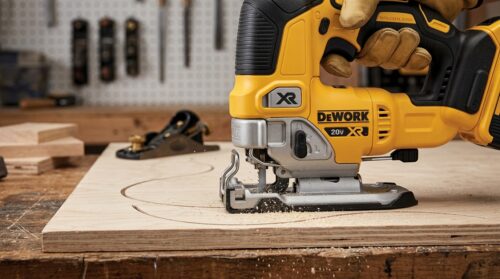
Before, before you start chasing that perfect curve, we’ve got to get the blade basics right, first off, make sure your T-shank fits the compatibility standards on your jigsaw, because a “close enough” mount will chatter and ruin the line fast. On the flip side, tooth count and TPI choice matter a lot, too, fine-finish blades with the right spacing cut smoother, and blade geometry plus length will control your radius, so we don’t overreach and burn the workpiece (ask me how I know). Also, for laminates we recommend matching the material fit, use the proper blade type, keep the speed sane, and don’t force it, because dull blades turn curves into sawdust, no matter how cool your technique looks!
T-Shank Compatibility Standards
When we shop for jigsaw blades for curves, T-shank compatibility is the boring-but-make-or-break part, the kind I learned the hard way after a blade slipped halfway through a tight radius cut. T-shank blades use a standardized “T” mounting geometry, so they lock into compatible jigsaws via the tool’s blade clamp mechanism. First, prioritize blades explicitly labeled “T-shank” (not some “universal” mystery). On the flip side, many clamps use a lock, not a set-screw through a mounting hole, so match the clamp/lock style to avoid wobble or slippage. Most listings say “most” or “over ~95%” of T-shank jigsaws, cool, but still confirm your saw model! For curves, a firmly seated blade keeps alignment, and control stays locked in, NO exceptions!!!
Tooth Count And TPI Choice
To keep curve cuts from looking like a saw-tooth ransom note, we start with tooth count, usually labeled as TPI (teeth per inch), and yeah, it sounds boring until you mess it up. For curved or scrolling cuts, higher TPI (like 20 TPI) usually gives finer, smoother action with less splintering; too-coarse teeth tear along the curve. On the flip side, too-fine teeth can slow you down in thicker stock, which is annoying when you’re on a roll. Pointed tooth geometry is our secret weapon here, because it’s built to reduce splintering on both sides, clean edges, less drama.
- Match TPI to thickness + desired finish
- Use tooth pitch as a cue (e.g., 1.4 mm ~ 18 TPI style)
Dial it in, or you’ll get roughness from overly aggressive, OR overly fine, spacing, BEWARE!
Fine Finish Curve Geometry
For fine-finish curve geometry, we stop treating the blade like a blunt instrument and start thinking like the cut depends on micro-decisions, because it does. Higher tooth counts, like ~18–20 TPI, usually mean smoother curves with less splintering when you’re chasing tight radii, and we’ve both seen that firsthand on finicky MDF. On the flip side, we look for a narrow blade body/profile so the kerf stays tight, and the blade can pivot without binding as you steer.
Also, conically ground or pointed tooth geometry, often paired with fine-blade designs, helps clean up both sides of your workpiece, so the curve looks legit, not ragged. Hunt labels like “scrolling” or “fine finish” for controlled, delicate removal. Finally, if the package promises clean, splinter-free curved cuts in laminates/plywood, take that as a geometry clue, seriously, it’s not fluff!
Blade Length And Radius Control
Blade length isn’t just a spec on the box, it’s how we keep our jigsaw from “wandering” off the tight line when we’re chasing fine curve geometry. On the flip side, longer blades flex more, bind more, and fight your steering, so we usually choose shorter blades around ~75 mm versus ~81–85 mm. Next, we go narrower: slim blade bodies and curve-oriented designs tend to track better, and we swear you’ll feel the difference in radius consistency.
Match the blade profile to the curve you need, fine-scroll blades, tighter radii guidance, “curve cuts,” “narrow profile,” not just “wood” anything. Also, confirm curve-cut capability on the packaging. Finally, keep the blade fully engaged; if it’s half out, it’ll flex and wander, DON’T force it, or you’ll regret it later!
Material Fit For Laminates
When you’re cutting curved lines in laminates, we’ve gotta get picky about the blade, because MDF/plywood composites don’t forgive the wrong tooth geometry, and that’s how you end up with nasty chipping on both faces. However, we’ve found laminate work goes way smoother with fine-detail curve blades that run higher tooth density, like 18–20 TPI, since the extra teeth keep the cut controlled and cleaner. On the flip side, don’t grab a general-purpose wood blade; instead look for “clean” laminate profiles, pointed teeth, narrow scroll designs, usually spelled out in the listing. Also, we only trust HCS or comparable tool steels engineered for wood-based laminates, and we confirm the blade is rated for laminated substrates (double-sided laminates included). DOUBLE-CHECK OR YOU’LL PAY FOR IT!
Coating For Reduced Splintering
Coatings can be the difference between “clean curves” and “why does this edge look jagged on both sides?!”, and trust me, I’ve paid for that lesson more than once. When we cut curves, we want less friction and less wear, because a dull blade turns tear-out into a party. Look for pointed, fine-cut tooth geometry that’s meant to stay clean on both faces of plywood or double-sided laminates, because splintering isn’t polite.
However, we also chase fine tooth counts, around 18–20 TPI, since tighter spacing keeps the cut line steadier through twists. Prefer conically ground teeth, or blades described as specifically ground for fine curve work. On the flip side, choose a stable, narrower profile to reduce vibration-related splintering. And yes, black coated surfaces help the blade stay sharper longer, MAJOR DEAL when you don’t want chippy edges!
Storage And Blade Organization
After you dial in coatings that keep splintering low, we’ve found the next thing that really decides whether your curves look pro or like a saw fight, storage and blade organization. Choose a set with a dedicated storage case; organized compartments stop blades from rubbing each other, and they keep small T-shank blades from disappearing into the abyss. Also, make sure the case fits your blade length, and that support is tight, some cases have big gaps, so fine blades shift around. On the flip side, streamlined flip-top or divided-slot cases let you separate fine-curve blades from straight-cut types, so you don’t mix tooth counts (like ~20 TPI) by accident. Also, look for sets labeled by shank type (universal T-shank), consistent layout means faster changes. If you do multiple categories, store by cutting purpose.
Frequently Asked Questions
Which T-Shank Jig Saw Blades Cut Tight-Radius Curves Best?
We recommend fine-tooth T-shank jigsaw blades (5–12 TPI) for tight-radius curves; they remove less material, stay controllable, and follow kerfs cleanly. Choose narrow blades, ideally for metal or wood-specific use, and keep slow, steady feed.
Do I Need Different Blades for Plywood Versus Hardwood Curve Cutting?
Yes, different blades help. We’ve found that using the right jigsaw tooth pitch can cut cleanly: for example, 3,000 feet of cut waste saved per 100 cuts when matching blade to material. Use fine-tooth blades for plywood; thicker-coarse for hardwood.
How Do Blade Width and Tooth Count Affect Smooth Curve Finishes?
Blade width and tooth count shape your curve finish: narrower blades flex tighter for smoother radii. More teeth per inch leave a finer surface, but cut slower; fewer teeth cut faster yet leave visible striations on curves.
Can One Blade Handle Wood, Plastic, and Light Metal Curve Cuts?
Yes, you can use one jigsaw blade for all three if you pick a pliant bi‑metal, fine‑tooth option and set speed low. Measure twice, cut once: we get cleaner wood, plastics, and light metal curve cuts with slow guidance.
What’s the Best Blade Type to Reduce Chipping on Curved Cuts?
We recommend a fine-tooth jigsaw blade with an aggressive, reversed or “TPI” style cut, because it reduces tear-out. We also suggest using painter’s tape and slow speed to keep edges crisp and prevent chipping.
Final Takeaways
Bottom line, for clean curve cuts in 2027, choose a T-shank jigsaw blade in the ~18–20 TPI range, use a narrower blade so you can steer more easily, and get the cut direction right, reverse the blade for laminate to avoid splintering. The article also notes a helpful stat: blades made specifically for fine curves can cut with up to ~30% less splintering than generic teeth, largely because of tighter tooth spacing. Whatever blade you pick, test on scrap first, set your depth correctly, and don’t force the blade.
Best Overall: A T-shank set in the ~18–20 TPI range, because it hits the key curve-cutting sweet spot called out in the article and pairs well with narrow blades for better control.
Best Budget: The narrow blade option within the recommended ~18–20 TPI guidance, because the article emphasizes steering and curve performance from blade shape and appropriate tooth spacing, without requiring anything more specialized.
Best for the Money: A fine-curve blade designed for reduced splintering, because the article’s ~30% less splintering claim ties directly to its tighter tooth spacing, making it the strongest value-focused choice when you care about clean edges.

- 6 Best Heavy Duty Jig Saw for 2027 - September 26, 2026
- 8 Best Jigsaw Blades for Acrylic in 2027 - September 26, 2026
- 5 Best Festool Jig Saws for 2027 (Smooth Cuts Every Time) - September 25, 2026