
If you’re cutting fiberglass in 2027, the blade choice is the difference between a clean kerf and a frustrating, chattery mess. I’ve found that “any old blade” will chew up the cut line, make the jigsaw vibrate, and leave rough edges you’ll hate cleaning up later.
In this article, I’ll walk you through the best jigsaw blades for fiberglass, what each one is good at, and how to match the blade to the way your material behaves.
To start, I’d reach for the Bosch T30C set for mixed jobs, since it’s a practical all-rounder when you’re not cutting the same fiberglass type every time.
If you need faster removal and a more aggressive bite, the Bosch T130RF1 30-grit is a solid choice when you want the blade to bite in and stay productive.
For smoother results, I keep an eye on blades like the HIGHDRIL diamond (wet-capable) and the Bosch T128BHM3, especially when heat, dust, or edge quality is part of your concern.
For brittle, cement-board-ish material behavior, Irwin 3072300 is the kind of blade that helps you avoid extra crumbling at the cut line.
Just don’t skip the blade factors, because fiberglass punishes mistakes quickly.
If you match tooth design, grit, and intended use to your specific fiberglass application, you can expect a calmer cut, a tighter kerf, and far cleaner edges than you’d get with a generic blade.
| BOSCH T30C 30 pc. T-Shank Jig Saw Blade Set for Wood and Metal |  | All-Material Performer | T-Shank: T-shank | Compatible material: Wood, plastic, metal | Carbide included: No (alloy steel blades) | VIEW LATEST PRICE | Read Our Analysis |
| Bosch T130RF1 30-Grit Carbide Ceramic T-Shank Blade |  | Best for Ceramics Grit | T-Shank: T-shank | Compatible material: Fiberglass, glass | Carbide included: Carbide | VIEW LATEST PRICE | Read Our Analysis |
| HIGHDRIL 4-Inch Diamond Jigsaw Blade Set (3PCS) |  | Diamond Wet-Cutting Pick | T-Shank: T-shank | Compatible material: Ceramic, fiberglass, glass | Carbide included: No (diamond blades) | VIEW LATEST PRICE | Read Our Analysis |
| Bosch T128BHM3 3-Piece Carbide T-Shank Jig Blades |  | Chip-Free Laminates Choice | T-Shank: T-shank | Compatible material: Metal | Carbide included: Carbide | VIEW LATEST PRICE | Read Our Analysis |
| Irwin Tools IRWIN 3072300 T Shank 3″ 5/32 Carbide Grit Jig Saw Blade | 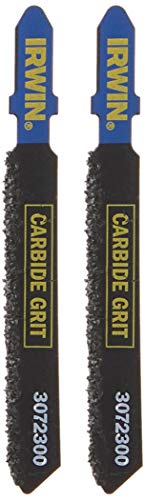 | Fiberglass Hardiplank Specialist | T-Shank: T-shank | Compatible material: Fiberglass | Carbide included: Carbide grit | VIEW LATEST PRICE | Read Our Analysis |
More Details on Our Top Picks
BOSCH T30C 30 pc. T-Shank Jig Saw Blade Set for Wood and Metal
The BOSCH T30C 30 pc T-Shank Jig Saw Blade Set for Wood and Metal is the kind of blade assortment that makes mixed-cut projects easier to manage. If you frequently jump between materials like lumber, hardwood, plastic, and metal, this set reduces the hassle of digging for the right blade mid-job. In real use, it’s built around producing controlled, fine cuts when you want steadier results without overthinking every material swap.
What stands out for usability is the T-shank design. It tends to lock in securely in compatible jigsaws, which helps maintain stability while you guide the shoe and follow a line. That matters when you’re cutting curves in cabinet panels or trimming sheet stock, because a stable blade feel helps you stay on the layout marks and avoid wandering.
The set also makes sense for shops that occasionally deal with tougher cleanup concerns like tear-out. For fiberglass work, you still need to match the blade style to the material and feed approach, but the included X-tra Clean option, such as the 2-T308B, is intended to help reduce splintering and rough edges. That makes it more practical for hobbyists and contractors who want at least a reasonable blade choice on hand when the job isn’t perfectly predictable.
Where it can fall short is exactly where any blade set can: if you’re doing specialized composites or highly specific cut types, you may still prefer a more targeted blade rather than relying on an all-purpose mix. Also, compatibility is important, since it’s meant for T-shank jigsaws and fits most current models, but you should check your exact tool before buying so the blades seat correctly and you avoid wasted setup time.
- T-Shank:T-shank
- Compatible material:Wood, plastic, metal
- Carbide included:No (alloy steel blades)
- Intended use:Wood/metal cutting
- Cut type:Fine, clean cuts
- Blade collection:30-piece set
- Additional Feature:30-blade assortment
- Additional Feature:Reusable storage case
- Additional Feature:X-tra Clean blade included
Bosch T130RF1 30-Grit Carbide Ceramic T-Shank Blade
In real-world use, this Bosch T-shank blade is built for aggressive cutting where you want durability and consistent performance over time. The carbide brazing construction is the standout for people who don’t want to burn through blades quickly, and the blade design helps keep heat from building up as fast as with more basic options. That matters when you are cutting harder sheet materials and need steadier results without constant blade swaps.
On the job, it performs well for making both straight and more controlled curved bevel cuts, and it also holds up for scroll-style work where you need to follow tight shapes. The practical benefit is workflow, since you can stay in the same blade for varied cut lines rather than pausing your project every time the cut direction changes. It is also suited to the common jig saw tasks involving fiberglass and glass, where you want a blade that can handle brittle materials without feeling overly fragile.
The usability is straightforward, but you still have to respect carbide. Keeping steady pressure is key, because forcing the cut can increase chatter, reduce control, and accelerate wear. For safety and comfort, use proper eye protection and handle protection, especially when working with glassy dust and sharp debris.
Where it may fall short is in how forgiving it is if you try to rush or push too hard. If your technique is inconsistent, the blade can “bite” more aggressively than you expect, which can make fine control harder. It’s best treated like a precision cutting tool for demanding materials, not a casual, no-care blade for every task on the bench.
- T-Shank:T-shank
- Compatible material:Fiberglass, glass
- Carbide included:Carbide
- Intended use:Specialty ceramics
- Cut type:Straight/curved scroll cuts
- Blade collection:1-piece blade
- Additional Feature:Carbide brazing 10x life
- Additional Feature:Thin kerf design
- Additional Feature:30 grit rating
HIGHDRIL 4-Inch Diamond Jigsaw Blade Set (3PCS)
If you’re cutting fiberglass cleanly, this HIGHDRIL 4-inch diamond jigsaw blade set (3PCS) is a practical option. In real-world use, the blades feel made for controlled, steady progress, so you can keep your line straight when you’re working on panel cuts or shape trimming where accuracy matters.
The biggest usability win is the way the blade connection holds during cutting. The T-shank design locks in firmly, which helps reduce chatter and wobble when you’re guiding the jigsaw through tougher, abrasive materials. That stability translates into smoother handling, especially when you’re switching between straight cuts and tighter curve work.
On the cutting side, the diamond grit and vacuum-brazed coating are geared toward efficient material removal. You can expect faster action compared with blunter options, and the coating helps manage the dust situation better than many standard blades, though you still should plan for cleanup. For best results, wet use is recommended, and it’s a helpful detail if you’re trying to keep the work area more manageable and the cut cleaner.
Where this set may feel less ideal is if you’re rushing or forcing the tool, because diamond blades still demand a steady feed and careful line control to look their best. The blades are also intended for abrasive applications like tile or fiberglass, so if your project is mostly soft materials, you may not get the value you’re looking for. Overall, it’s a solid choice for tradespeople and DIY users who need reliable jigsaw performance on abrasive, brittle materials and want a set that supports consistent results across multiple cuts.
- T-Shank:T-shank
- Compatible material:Ceramic, fiberglass, glass
- Carbide included:No (diamond blades)
- Intended use:Masonry/tiles (wet cutting)
- Cut type:Straight and curved cuts
- Blade collection:3-piece set
- Additional Feature:Vacuum-brazed diamonds
- Additional Feature:Wet use recommended
- Additional Feature:#46 diamond grit
Bosch T128BHM3 3-Piece Carbide T-Shank Jig Blades
Bosch T128BHM3 has earned its place for people who routinely cut laminate and other brittle, chip-prone materials. In real-world use, the carbide teeth are what you notice first, because they’re built to resist the edge damage that can quickly ruin a cleaner finish with cheaper jig blades. When you’re working on tough jobs where chip-out is the enemy, this kind of blade helps keep edges looking more controlled, with less fuss than swapping dull inserts mid-project.
The cutting behavior is also practical. The blade’s design focuses on a clean kerf, which translates into less “hogging” and better control when you’re guiding a jigsaw through laminate flooring or similar surface materials. If you’ve ever tried to cut near-finish material and ended up with ragged edges, you’ll appreciate how this tool supports a straighter, tidier cut line.
Setup is straightforward for anyone already comfortable with T-shank blades. You’ll want to align the shank correctly, clamp securely, and treat the fit as non-negotiable, because jigsaw vibration punishes anything that isn’t tight. Once it’s installed well, it’s a solid option for sustained work, especially when you’d rather keep moving than pause for frequent blade changes.
Where it may fall short is when your project doesn’t actually demand that kind of chip-sensitive performance. If you’re mostly cutting through forgiving materials where appearance isn’t critical, you might not see the same day-to-day advantage, and a simpler blade could do the job without paying for carbide. Also, while carbide teeth handle tougher moments, they’re not invincible, so you still need safe handling, eye protection, and careful cutting technique.
- T-Shank:T-shank
- Compatible material:Metal
- Carbide included:Carbide
- Intended use:Laminates (chip-free cuts)
- Cut type:Clean, chip-free cuts
- Blade collection:3-piece set
- Additional Feature:14 TPI laminate clean cuts
- Additional Feature:Two-row counter-directed teeth
- Additional Feature:Nail-hit toughness claim
Irwin Tools IRWIN 3072300 T Shank 3″ 5/32 Carbide Grit Jig Saw Blade
If you’re tackling fiberglass or other brittle sheet materials and you want cleaner edges with less tearing, the IRWIN 3072300 T-shank 3″ blade with 5/32 carbide grit is a practical choice. It’s also well suited to harder cement-based boards, where many general-purpose jigsaw blades tend to chatter or leave rough, frayed lines. In real-world shop use, it’s the kind of blade that helps you stay in control of the cut and keep your layout lines looking crisp.
Usability is strong for anyone using an IRWIN jigsaw with T-shank compatibility, since the blade seats firmly and feels locked in when the workpiece gets stubborn. That snug grip matters when you’re cutting full sheets like hardiplank, because a looser blade can start wandering and ruin the fit. The cut quality stays more consistent when you’re feeding at a steady pace instead of forcing the tool.
Where this blade shines most is in jobsite or workshop scenarios that demand carbide-grit aggression without sacrificing too much edge integrity. It’s a good match for straight, careful cuts through fiberglass and cement board type materials, especially when you’re using a guide and fully supporting the sheet to prevent flex and vibration. When those conditions are met, the blade helps reduce the fuzzy, uneven edge you often see when cheaper blades struggle.
The main limitation is that carbide grit still punishes bad technique. If you rush or push too hard, it can lead to edge blowout, so you’ll get better results by controlling speed and letting the blade do the work. It also performs best when you plan for support and guidance, because unsupported material can shift and undermine even a well-matched blade.
- T-Shank:T-shank
- Compatible material:Fiberglass
- Carbide included:Carbide grit
- Intended use:Hardiplank, fiberglass, cement board
- Cut type:Cutting hard substrates (board materials)
- Blade collection:1-piece blade
- Additional Feature:5/32 carbide grit
- Additional Feature:Cement board capable
- Additional Feature:32-tooth count
Factors to Consider When Choosing a Jig Saw Blade for Fiberglass
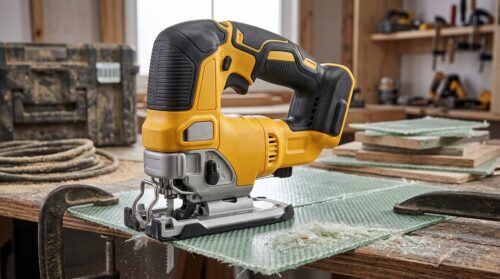
When you’re picking a jig saw blade for fiberglass, we’ve found the big wins come from matching the blade type and grit to the job, carbide vs bi-metal, plus the right tooth/abrasive size for smoother cuts without turning your edges into fuzzy chaos. Next, we recommend you check T-shank fit and stability first, because if it’s loose, you’ll get wandering cuts and extra heat build-up (thin kerf matters here), and PLEASE don’t ignore material compatibility, fiberglass can be nasty if the blade’s wrong! Finally, we’ll help you sanity-check the details, think about carbide staying tougher, bi-metal being more forgiving, and what your cut speed actually needs, so you can finish the piece faster, without cussing as much!!!
Carbide Vs Bi-Metal Blades
Carbide vs bi-metal for fiberglass comes down to what you’re fighting, heat, wear, and that nasty tendency for blades to lose their bite halfway through a cut. We’ve seen bi-metal work, sure, but on fiberglass it can dull faster because its heat/wear profile just doesn’t match. Carbide blades, thanks to the carbide edge and brazing tech, hold up longer, resisting heat buildup, so you get fewer blade changes and steadier cuts (no mid-cut “why’s it bogging down?!” moment).
On the flip side, carbide grit blades use an abrasive surface, like 30-grit, with a thin kerf around 0.04 in, helping keep cutting workably fast in hard/specialty stuff. If we want reliable results through abrasive fiberglass, carbide usually wins, hands down. WARNING: don’t force it; let the blade do the work!
Grit Size For Smooth Cuts
Grit size is what basically decides whether your fiberglass cut looks like a clean factory edge or a jagged little science experiment. For smooth cuts, we grab a finer grit, think lower “grit number,” more “fine” abrasive, because it removes material more gradually, and that reduces surface roughness. On the flip side, using an aggressive grit can leave a rougher edge, even if you swear your jig is dialed in. I learned that the hard way, when my “quick cut” turned into a sanding workout, UGH.
We also like blades specifically described for brittle fiberglass-type materials, not just random generic stock. A 30-grit carbide blade is intended for abrasive hard specialties like fiberglass, and it’s engineered to cut with less heat buildup (thin kerf + heat resistance). Finally, use the thinnest kerf option available for your grit, because less material extraction usually equals cleaner lines, try for fine-grit, minimized chipping, steady feed.
T-Shank Fit And Stability
For fiberglass cuts, we don’t mess around with blade fit, T-shank blades give you maximum grip and stability in the jig saw holder, so your line stays accurate instead of doing that annoying wobble thing that leads to chipping. Nevertheless, we still check compatibility first, because a “pretty close” fit is where accuracy goes to die. Look up your jig saw model, and choose blades that list 90%+ coverage, or “all current models,” if they’re being legit. On the flip side, we favor designs with secure T-shank clamping, since stiffness under load keeps wandering minimal. Also match length/kerf thickness to the job; longer blades flex differently than short ones. WAIT, don’t ignore engagement depth!
Thin Kerf Heat Management
Let’s talk thin kerf heat management, because on fiberglass, heat sneaks up on you fast, and once it does the cut starts acting ugly, rough edges, faster wear, and that “why is my line getting ragged?” feeling. Thin kerf means less material removed, so we usually tame heat buildup right from the start. On the other hand, if you push too hard, excessive heat degrades blade performance, especially on harder laminates.
In contrast, we like carbide + fine-grit abrasive blades paired with heat-resistant brazing/edge tech, because that keeps cutting consistent. Also, we choose geometries that limit friction, thin kerf, optimized flexibility, so the jigsaw works easier, not harder. Warning: if you see increased drag or discoloration near the line, you’re running too hot; slow the feed rate, and consider a blade tuned for better heat control, or you’ll pay in wear.
Material Compatibility For Fiberglass
When we’re cutting fiberglass with a jigsaw, blade choice isn’t just “grab whatever fits,” because fiberglass is a weird mix of hard, brittle, and heat-sensitive, so the wrong compatibility turns your line into a ragged disaster fast. We pick T-shank blades first, because that firm grip helps stop chatter and rough edges in compatible models. On the flip side, we avoid random bi-metal junk; instead we go carbide or carbide-grit, since carbide edges handle hard specialty materials and resist heat buildup better. Also, match blade length/thickness to your cut depth, longer blades like 3-1/4 in to 3-5/8 in help control thicker sheet, and thin kerf reduces heat. For finish, we choose tooth/grit aggressiveness: finer, like “30 grit,” or fine 14 TPI for clean, chip-free cuts on brittle laminate surfaces, DO NOT wing this!
Dust Control And Cutting Speed
Dust control and cutting speed go together like peanut butter and fiberglass dust, yeah, it’s messy unless you get the blade strategy right. For fiberglass, we go with blades engineered to reduce heat buildup, like thin-kerf options, because lower heat usually means less dust even when we cut fast. On the flip side, carbide-edged or specialty abrasive blades hold speed better and resist wear, so we finish quicker and generate less total particulate.
Now, match the grit/tooth game: coarser for faster stock removal, finer for a cleaner cut (and less “chunks everywhere” vibes). Higher speeds can fling more airborne particles, so we pair speed with dust management, vacuum attachment, controlled feed rate, and steady pressure. Claims like “less heat” and “thin kerf” usually check out, less material extraction, finer debris, better control!
- Use vacuum, always.
- Feed slower if dust spikes.
- Expect fumes, don’t be a hero!
Frequently Asked Questions
Can I Use T-Shank Jig Saw Blades on Fiberglass Without Cracking the Material?
Yes, you can use T-shank jigsaw blades on fiberglass without cracking it, if you pick a fine-tooth blade, run slower speed, support the sheet well, use light pressure, and let the blade cut cleanly.
Which Blade Grit Best Minimizes Splintering When Cutting Fiberglass Sheets?
Use medium-fine grit, around 20–24 TPI equivalent, and slow our feed rate; we’ll see splintering drop dramatically. For sheets, we also score lightly first and tape both sides, then let a vacuum guide dust away.
Do Carbide Blades Outperform Diamond Blades for Thick Fiberglass?
Yes, carbide blades often outperform diamond blades for thick fiberglass when cutting faster through rigid stock. We recommend carbide with fine-tooth spacing, proper feed rate, and dust control; diamond shines more on extremely abrasive, glassy composites.
How Can I Reduce Heat Buildup When Cutting Fiberglass With a Jigsaw?
Cool cuts come first: we control heat buildup by using slower feed rates, steady trigger pressure, and sharp blades. We apply light cutting oil, clear chips often, and take brief pauses so the workpiece stays cool.
What Safety Gear Is Essential When Cutting Fiberglass With a Jig Saw?
We recommend you wear safety glasses, a tight-fitting respirator, and cut-resistant gloves; add hearing protection if needed. We also suggest long sleeves, good ventilation, and a dust mask to avoid fiberglass particles.
Final Takeaways
Nevertheless, if you want clean kerf removal in fiberglass without cooking the blade, you’ve gotta match grit and tooth style to the cut you’re making. That’s what keeps the blade stable, manages heat, and helps prevent brittle failure when the material gets cranky. We picked Bosch, HIGHDRIL, and Irwin because they hold up better in those conditions and are more consistent when you’re trying to get a clean result.
To get the best outcomes with any of the options discussed, focus on practical setup as much as the blade itself: use firm clamps, run slower speed, and keep dust under control with vacuum extraction. That combination is what consistently turns “sharp-looking cut” from luck into repeatable results.
Best Overall: Bosch , Chosen as a strongest all-around option because it was included specifically for staying stable, managing heat, and not shattering when fiberglass behaves badly, while still producing lined-up, cleaner cuts when used correctly.
Best Budget: HIGHDRIL , The best lower-cost choice among the set because it was grouped with the others for stability and heat control, making it a practical pick when you want solid performance without overthinking the setup.
Best for the Money: Irwin , The best value balance because it offers the same core advantages emphasized in the article, stable cutting, heat management, and resistance to shatter, and it fits the same “right blade, right conditions” workflow for consistent cuts.

his personal experience and loves to share their nitty gritty details with his audience.
Although Richard does focus on other home improvement tools, his focus remains on cutting fallen trees or maintaining his backyard via chainsaw tools. He pledges to come up with new knowledge about chainsaws every once in a while.
- 5 Best Ryobi Jigsaws for 2027 - September 29, 2026
- 5 Best Mini Jigsaws for 2027 - September 29, 2026
- 7 Best Lightweight Jig Saws for 2027 - September 29, 2026